
The ocean is where every answer begins — and where every garment earns its meaning.
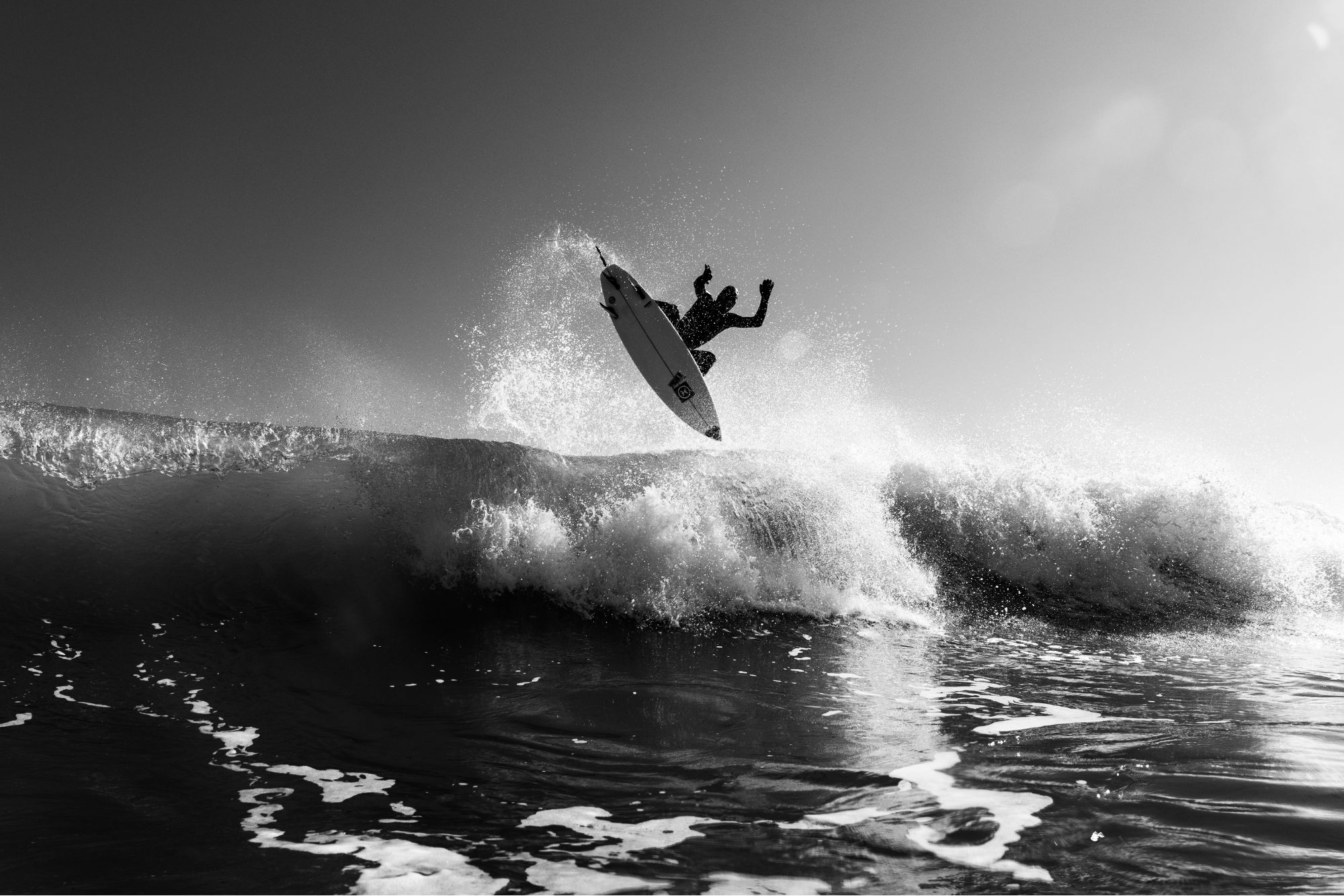
There are brands that look at the sea. Deeply learned how to read it.
When Deeply was founded in Portugal in 2004, it did not emerge from a trend or a market study. It was born from a way of understanding the world: one shared by those who know the ocean is not a backdrop, but a counterpart. It demands, it corrects, it brings you back to what is essential. It does not tolerate artifice—because in water, artifice simply does not work.
That logic—functional, honest, built from direct experience with the ocean—shaped the brand’s earliest products. Wetsuits designed by surfers for surfers, where performance was the only valid criterion. No external narrative. No calculated positioning. Only one question: does it work when it truly matters?
More than two decades later, Deeply has moved through three distinct ownership chapters: from the corporate group Sonae, which founded it, to António Cortez and Hernán Briones, two surfers who brought it back in 2021 because they loved it before they owned it, and finally its integration in 2023 into the Scalpers ecosystem. Three chapters, one uninterrupted conviction: the ocean is the criterion—everything else is built from there.
Today, with Tiago Lemos leading creative and technical direction from Portugal, Deeply enters the most ambitious chapter of its history: translating a surf identity into the language of everyday life.
That translation is what interests ÉTER: how an identity born in water learns to inhabit other spaces without losing coherence.
We spoke with the Deeply team to understand what it means to bring the ocean into the wardrobe—and what is built, and what is protected, when a brand born in water steps onto land.

Who is behind Deeply?
• Tiago Lemos
Creative and Technical Director. The continuity figure between what Deeply was and what it is today. While ownership and commercial strategy have changed hands, Lemos has preserved the technical standards, the sustainable materials, and the surf DNA that give everything else meaning. In a brand marked by transitions, he represents what was never negotiated.
• Borja Vázquez and Alfonso Vivancos
The Scalpers team. They currently lead the brand from a financial and expansion perspective. Their decision to preserve Deeply’s technical identity intact, rather than dissolving it into a premium fashion image, says something about what they recognize in it: a value that cannot be rebuilt from scratch.
The Dialogue
Deeply was founded in Portugal in 2004. Before ownership changes, before lifestyle positioning, before everything it has become today—there was an idea and a reason to begin. Who founded Deeply, what motivated its creation, and what did it want to represent from the start?
Deeply was born in Portugal in 2004, driven by a genuine connection to the ocean and surf culture. More than a brand, it emerged as a response to a way of life: one shared by those who understand the sea not only as a place, but as a state of mind. From the beginning, the intention was to create functional and accessible products, designed by and for surfers, with an honest and unembellished identity.
Deeply moved from corporate ownership to being led by two surfers who loved the brand before owning it. What did that chapter leave in its DNA—and how does that heritage shape creative decisions today?
When António and Hernán moved from being customers to leading the brand, the relationship changed profoundly. It was no longer admiration, but responsibility. Having experienced Deeply from the outside allowed them to understand what made it special, and from there build without losing its essence. Their current creative vision comes from that lived experience: maintaining authenticity while expanding the universe of the brand into a lifestyle approach.
“Having experienced Deeply from the outside allowed them to understand what made it special”
Deeply has a relationship with the ocean that goes beyond aesthetic inspiration. How is that connection expressed in concrete decisions—materials, design language, and what you want people to feel when they wear the brand?
At Deeply, the ocean is the origin of every decision. It translates into more responsible materials, designs built for movement, and garments that convey a sense of freedom, lightness, and connection. The idea is that wearing Deeply is not just about wearing clothing, but about feeling that proximity to the sea—even when far from it.

Making wetsuits with recycled oyster shell components is not a trend-driven decision. Where does that conviction come from, and how do you ensure it does not get diluted as the brand grows?
The use of materials such as recycled oyster shells comes from a real conviction: to reduce impact without compromising performance. Sustainability is embedded in the development process as a central decision-making criterion—before design, before the collection, before the season.
“Minimizing impact without compromising performance”
Many brands attempt the transition from sport to fashion and lose what made them unique along the way. What has guided Deeply to make that shift a natural evolution rather than a rupture?
The move toward lifestyle at Deeply is an extension. The brand translates surf into other contexts without abandoning it. Each collection preserves that functional and authentic DNA, avoiding superficial trends. The evolution feels natural because it continues speaking the same language—just across more scenarios.

What can Deeply offer to fashion that a brand born directly within fashion cannot? What is different about coming from water, from functionality, from reality?
Deeply brings truth. It comes from functionality, from real need. That translates into garments with purpose, where every detail has meaning. Compared to fashion-born brands, Deeply offers a deeper connection to use, environment, and experience.
When designing a garment, who do you design for? Do you have a clear image of the person who will wear it—how they live, what they value, what they seek beyond clothing?
Deeply designs for an active person, connected to nature, who values authenticity and simplicity. It is not only about how they dress, but how they live: someone seeking balance, freedom, and coherence between what they do and what they wear.
“Someone seeking coherence between what they do and what they wear”
Surf teaches that you cannot control the ocean—only learn to move with it. What has that philosophy taught you about building a brand in a constantly changing world?
Surf teaches adaptation, patience, and respect for what cannot be controlled. That philosophy shapes how Deeply builds its brand: listening, evolving, and remaining flexible in the face of change. The key is knowing how to flow without losing identity.

“The key is knowing how to flow without losing identity”
Deeply and the ocean: a commitment to preserving what gives them life
Fashion discovered sustainability relatively recently. It spoke about it, turned it into a differentiating value, and made it part of campaigns. In the process, the concept lost much of its real weight. Today, the word “sustainability” in a press release says very little. What matters is what lies behind it.
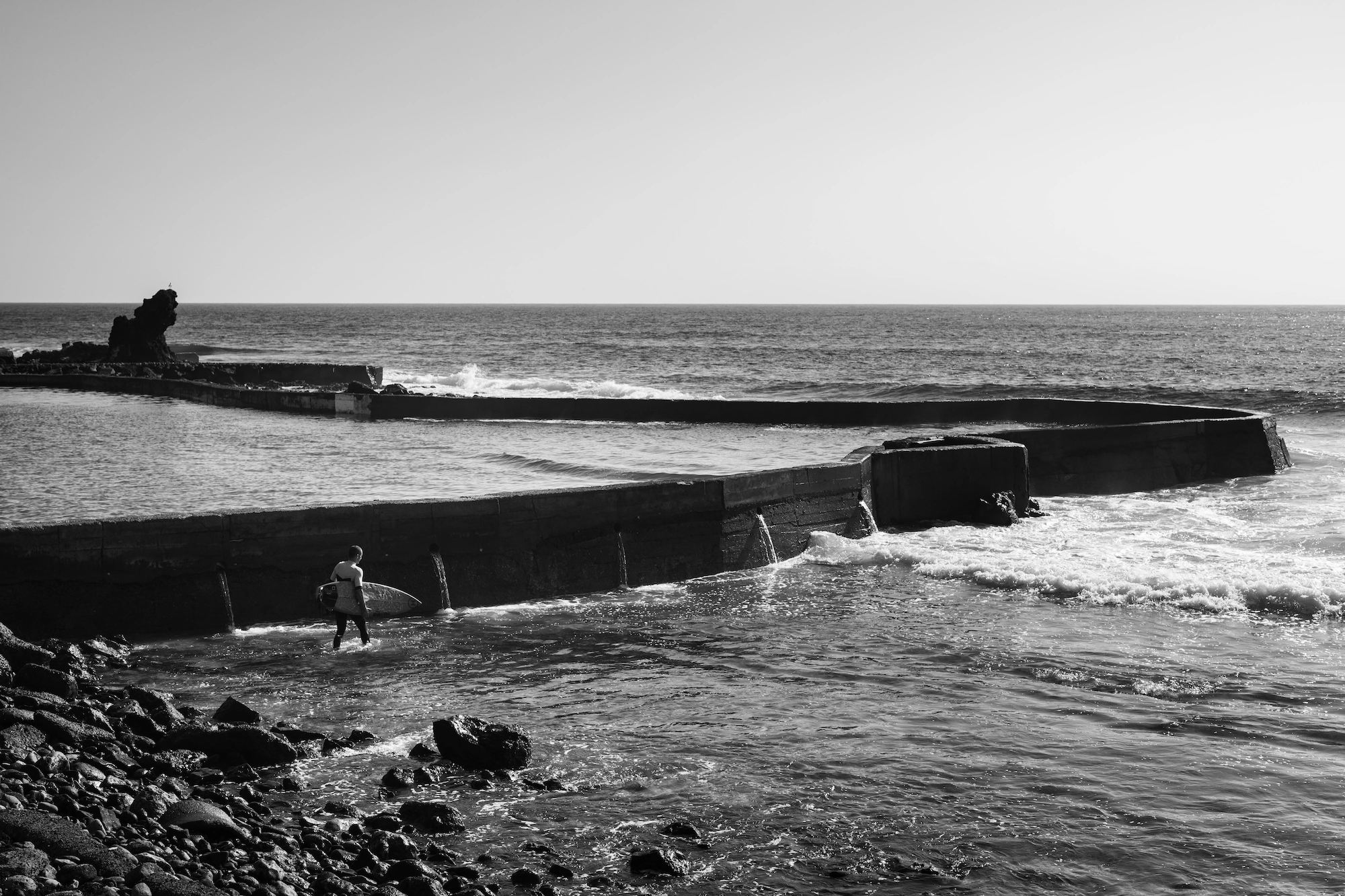
At Deeply, what lies behind it is a relationship with the ocean that predates any trend conversation. The surfers who founded the brand chose responsible materials because they surf, because they know the water, because they understand—through the body—what it means when marine ecosystems deteriorate. That origin is not semantic. It changes every decision that follows.
Wetsuits made with recycled oyster shell components are the most concrete expression of that logic. Oyster shells, a by-product of the food industry, can be processed into a natural rubber with technical properties comparable to conventional materials—but with significantly lower environmental impact.
This choice requires more than compromising performance. It requires transforming the entire process: researching new materials, redefining production, and building a different supply chain.
This philosophy is present from the very beginning of development: when materials are chosen, when durability is considered, when functionality is defined. The ocean enters the equation before the sketch. That sequence changes everything.
What makes this approach particularly relevant is that Deeply built its environmental relationship from direct experience with the ecosystem its products affect—long before external pressure made it necessary.
That is where conviction and communication strategy stop resembling each other.
“The ocean enters the equation before the sketch”
From sport to fashion: when a language is strong enough to expand
The relationship between sport and fashion has been shaped by decades of appropriation, reference, and partial translation. Fashion looks at sport with admiration—its functionality, its authenticity, its connection to the real body—but rarely understands it from within. The result is familiar: aesthetics referencing sport without understanding it, garments that look technical but are not, authenticity built as image.

Deeply operates from a different place.
Its move toward everyday lifestyle stems from a realization already embedded in the product: the values that make a wetsuit function in water are the same that make a garment meaningful outside it.
Functionality, durability, connection to environment, resistance to excess—design principles that remain relevant wherever clothing is meant to respond to real life.
The palette reflects this precisely: deep blues, greens, greys, browns—colors that create depth, referencing the ocean without illustrating it. Silhouettes are relaxed but never formless. There is a structural logic behind each piece that comes directly from surf, where form always responds to movement.
Materials retain the technical intelligence of surfwear—quick-dry, elasticity, durability—adapted to everyday use, where those same qualities still matter.
Surf culture has spent decades building a coherent way of life, with an aesthetic rooted in real values. Deeply was already speaking that language before the industry began chasing it.
“An aesthetic born from real values—before it had to be constructed”

Deeply has built a relationship with the ocean that runs through materials, processes, and design decisions without ever separating itself from its origin.
The language has shifted in scale. The root remains exactly in the same place.
Images courtesy of Deeply
Discover more about Deeply