
Fashion that performs leaves nothing. The most radical thing a garment can do is last.
There are brands that step onto a runway to show clothes, and there are brands that step onto it to say something. Knowing how to distinguish between the two is, perhaps, the first craft of writing about fashion.
Some brands create clothes. Others create a language. SKFK does both, but what it truly constructs is something harder to name: a way of inhabiting the world.
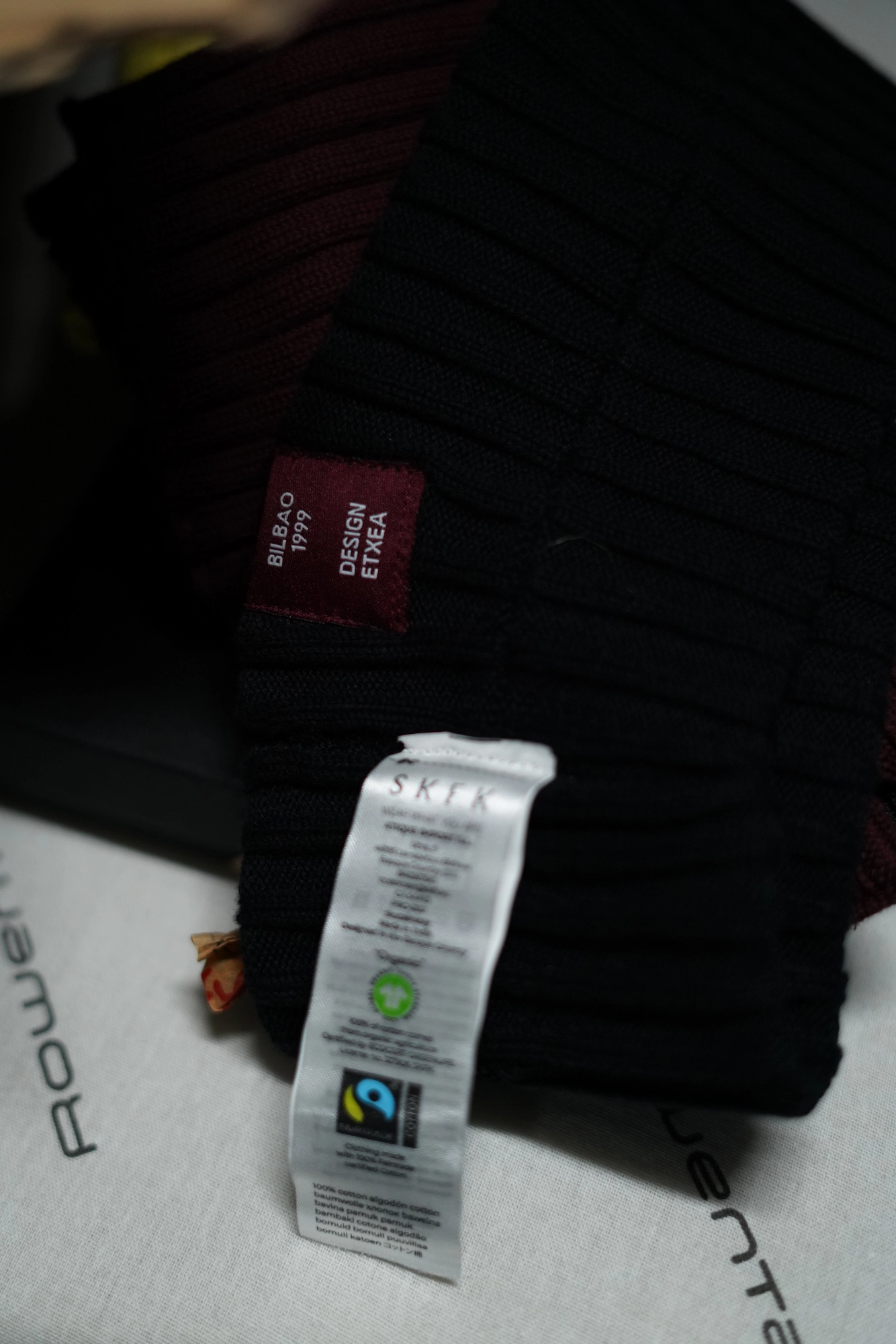
Born in 1999 in the Basque Country under the name Skunkfunk, this Bilbao-based label has been operating for over two decades from a premise the market still struggles to fully grasp: that beauty and ethics are not opposites, but the same thing seen from different angles. It was the first fashion brand in Spain certified Fairtrade® and GOTS—the international standard for organic textiles—and its production model remains a reference within the European slow fashion movement today. But reducing SKFK to its environmental commitment would be to stay exactly on the surface they have chosen to transcend.
Behind each collection lies a deep investigation into materials, processes, and meanings. A team works alongside artists, biomaterials researchers, and artisans. A creative director defines their approach as elastic architecture: flexible in form, unshakable in essence. And there is a question that runs through everything they produce, even if it never appears on a label: can a garment be, at once, a political act, an object of art, and a second skin?
In their debut at the 37th edition of 080 Barcelona Fashion, held for the first time at Barcelona’s Port Vell, SKFK did not come to answer that question. They came to show they have been living it for twenty-five years.
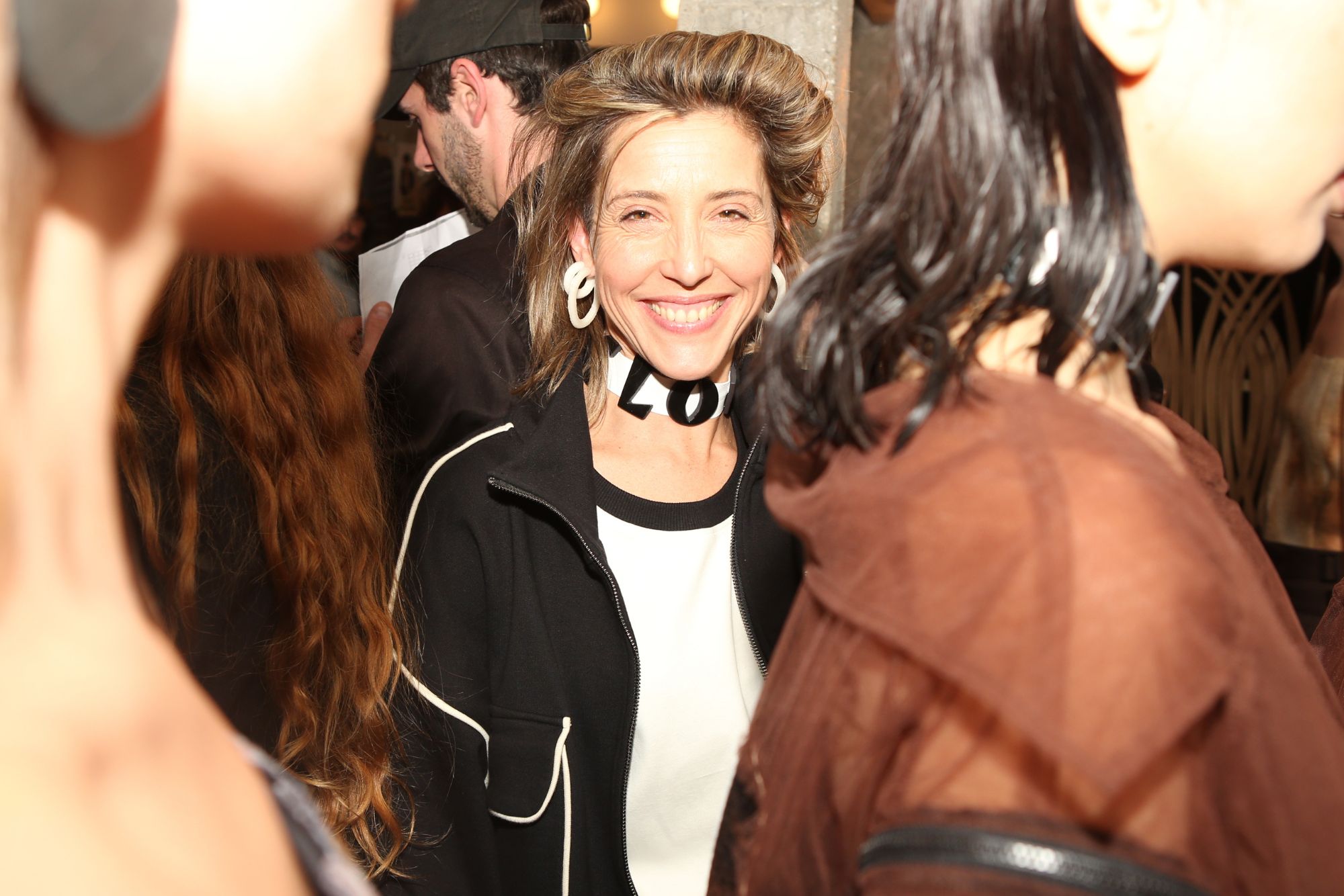
Backstage. Minutes before the show. Maia Curutchet, Creative Director of SKFK, offered us what the runway does not reveal: the moment before everything begins.
Who is behind SKFK?
• Mikel Feijoo Elzo
Founder and Managing Director. It was in London, witnessing how tons of clothing were destroyed after a single wear, that he made the decision that would define everything. For over two decades, he has been proving that sustainable fashion is not a niche, but a necessity.
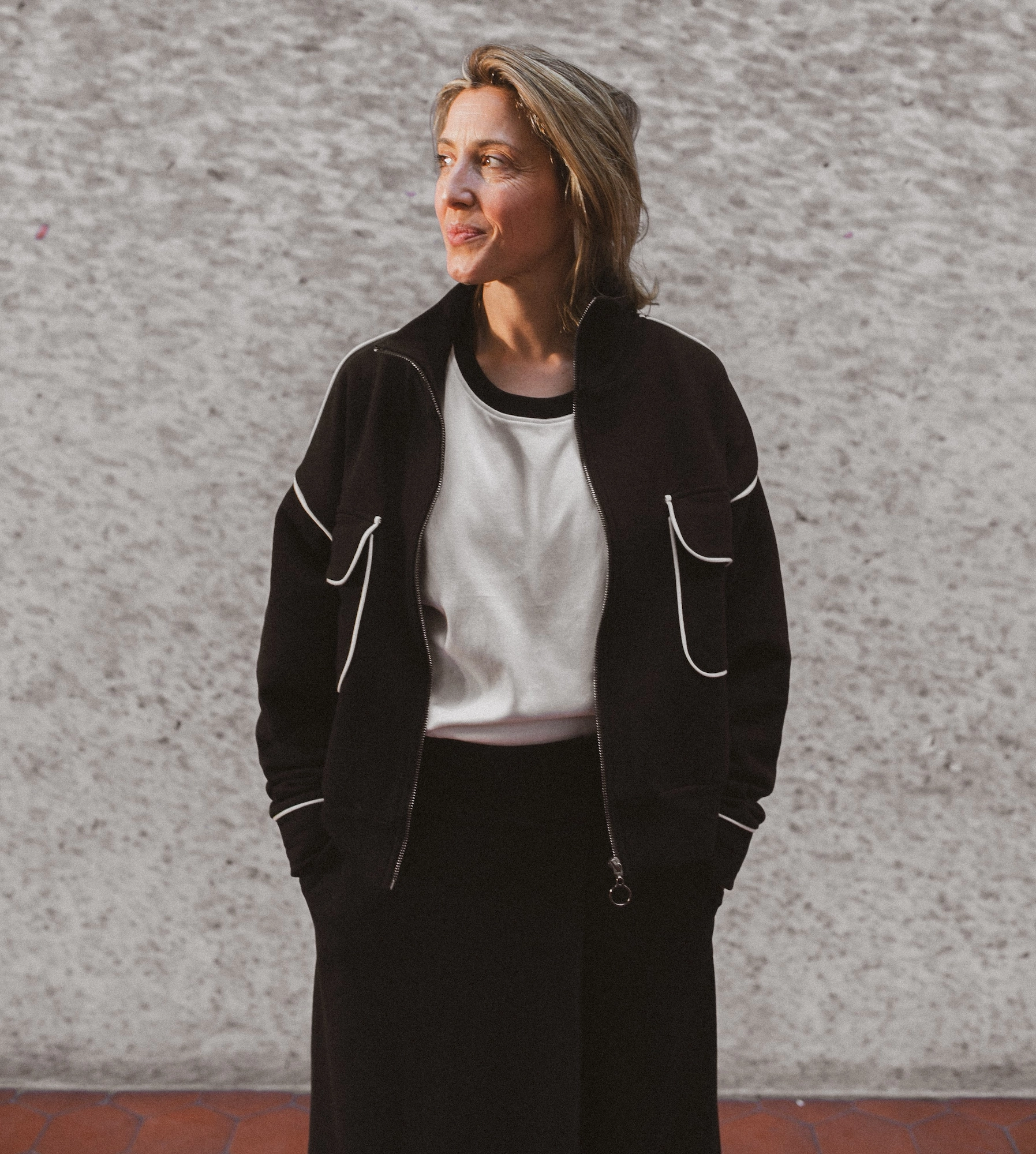
• Maia Curutchet
Creative Director. She grew up between places, absorbing diverse references, and that constant state of being between worlds defines her way of creating. Her process does not begin with trends, but with questions. She describes her approach as elastic architecture: solid in thought, never rigid in form.
The Dialogue
How would you describe SKFK and what is its current vision within the fashion industry?
SKFK is a brand that sits between art and ready-to-wear. It was born from a context closely linked to urban and musical culture, and although it has evolved a lot over these more than 25 years, it still preserves that creative and somewhat nonconformist spirit.
What does it mean to you to create from stillness in a world accelerated by trends?
It means working from a rhythm of our own, one that is not conditioned by the immediacy of the industry. Each collection requires almost a year of development: research, fabric design, printing, testing… it is a long and very manual process that does not fit into the logic of immediacy.
That is why we also question the formats in which fashion is presented. The runway, for example, has become a space where there is time, listening, and the possibility of error or change. Compared to the digital world, which tends to be more controlled and fast, here there is a more real and shared experience.
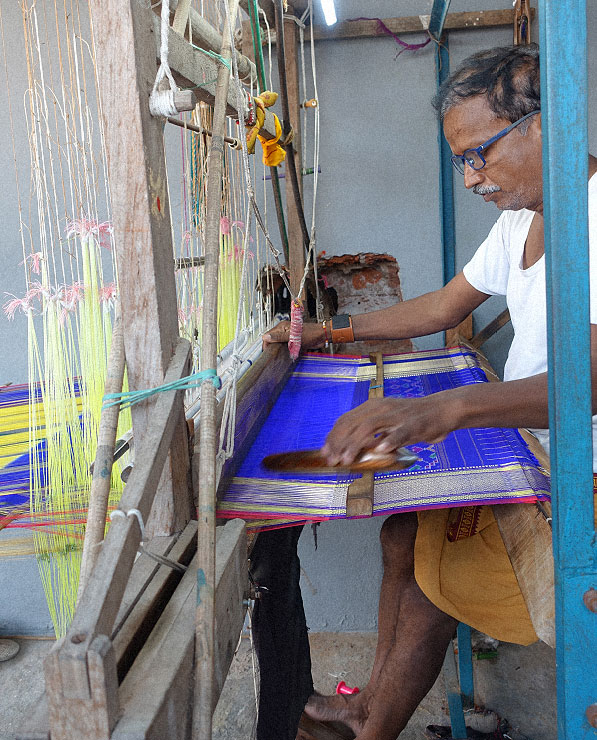
Image courtesy of SKFK
Process becomes visible.
Do you think that today fashion should go beyond aesthetics and take a stance on cultural or social issues? Why?
Yes, every decision—what you produce, how you do it, with whom, and under what conditions—has a direct impact.
We understand fashion as a cultural tool that not only represents, but also intervenes in the context in which it exists. It is not only about communicating an idea, but about sustaining it through real decisions across the entire value chain.
“Every decision—what you produce, how you do it, with whom, and under what conditions—has a direct impact”
How is SKFK’s ethical awareness translated into the visual language of its collections?
Ethics is not separate from design; it runs through it. This translates into very concrete decisions: from the choice of materials to who we work with and how fabrics and prints are developed. It is important for us to know the traceability of each piece and to understand the real impact of what we are creating.
In an industry where the people behind production are often made invisible, it is essential for us to place the focus there.
Maia, what ideas and emotions feed your creative process?
I grew up as an expatriate, and that strongly influences the way I observe the world: there is always a sense of being between places, absorbing different references.
What defines my way of creating the most is what I call elastic architecture: a flexible way of working, capable of adapting to what is happening, but supported by a solid structure of thought that is not rigid, but in constant evolution.
How is your creative process when developing a collection, and what do you draw inspiration from to begin with?
It usually starts quite intuitively, but it is a creative and artistic process in which we work to shape and defend an idea.
We work a lot on material research, colour, and textures. It is a living process, where ideas evolve as we design, and where there is space for the collection to find its own language.
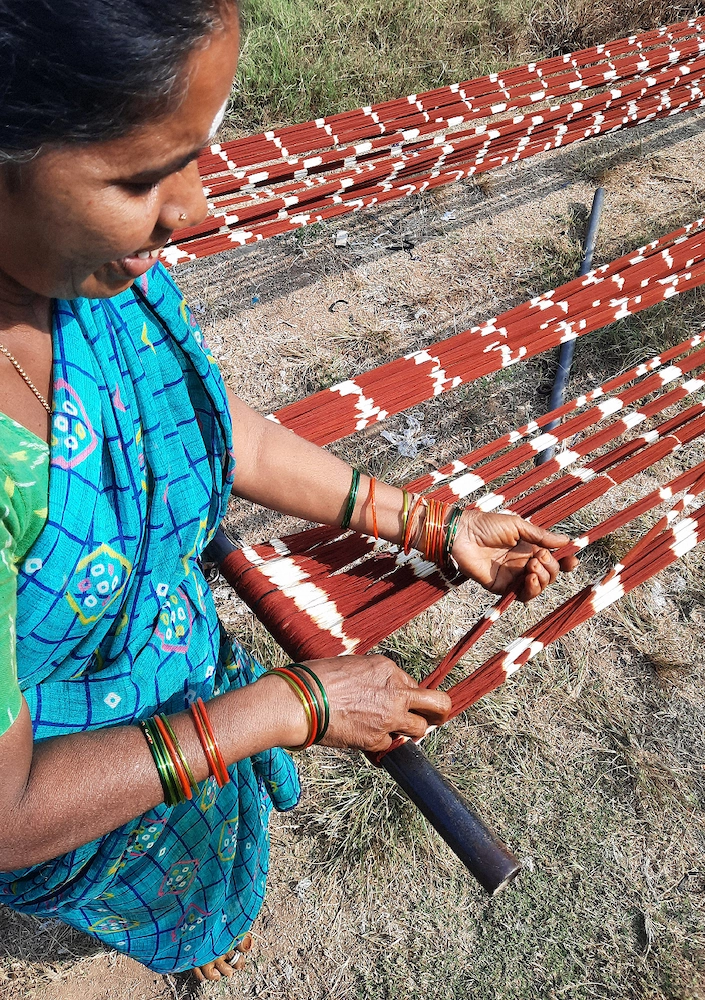
Image courtesy of SKFK
When you design, how do you imagine people use and feel when wearing your garments in their everyday lives?
We imagine real people in their daily lives. Clothing has to accompany, not impose; it is our second skin, how we choose to show ourselves to the world.
Looking to the future, what impact would you like your work to have on society?
We would like to continue building a way of making fashion that stands the test of time, both creatively and humanly. That garments are not understood as something ephemeral, but as pieces that accompany.
“We would like garments not to be understood as something ephemeral, but as pieces that accompany”
LOTURA at 080 Barcelona Fashion: runway as experience
April 14. The first day of the 37th edition of 080 Barcelona Fashion. A new location at Port Vell, with the sea as a backdrop and the city as witness. And in that opening setting, SKFK stepped onto a Barcelona runway for the first time.
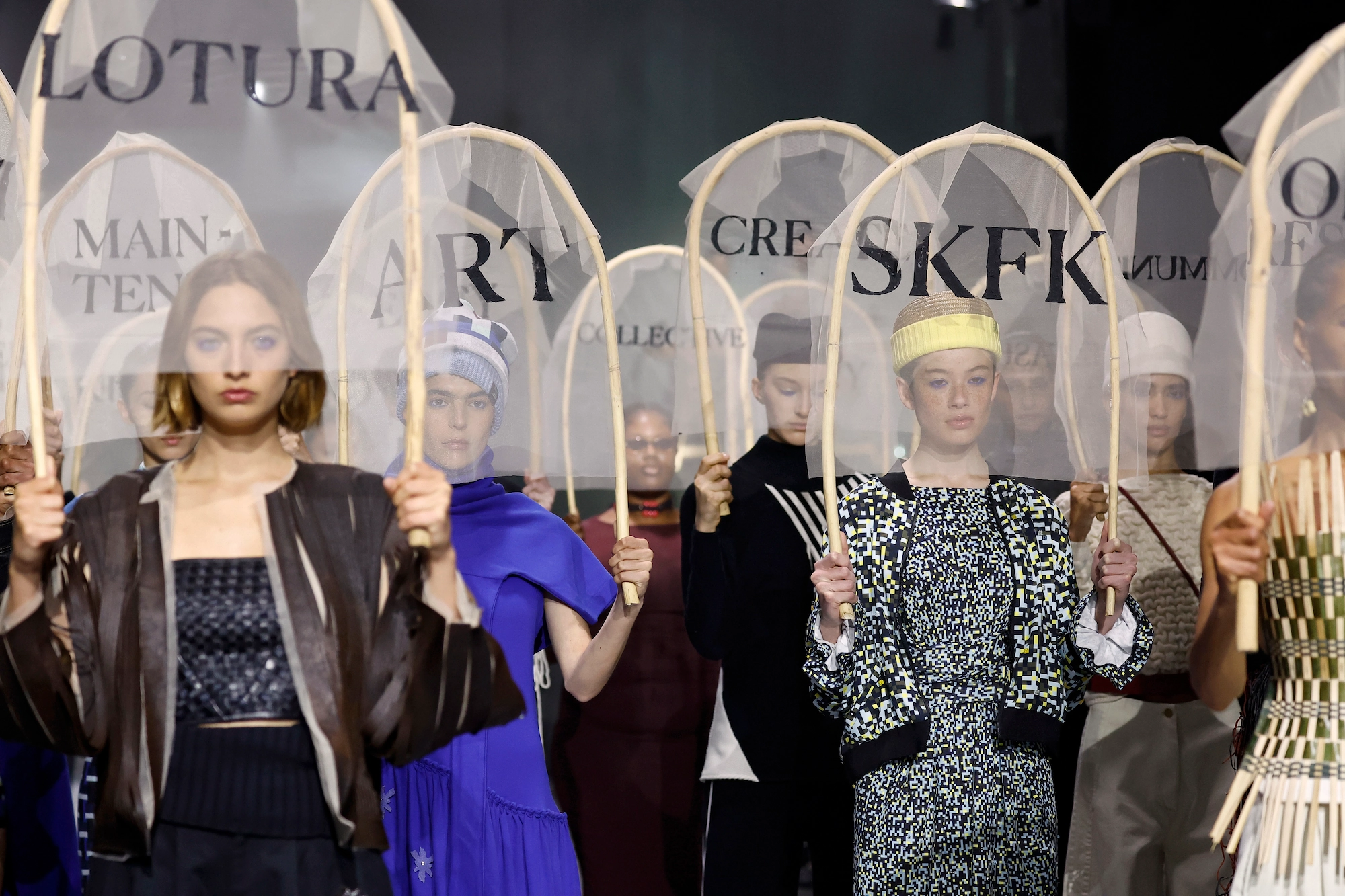
Image courtesy of SKFK
They did not arrive to impress. They arrived to say something.
LOTURA —which in Basque means to unite, to connect— is a collection built from the inside out. The body not as a support, but as a starting point. Materials not as surface, but as dialogue. The process not as a means, but as an inseparable part of the result.
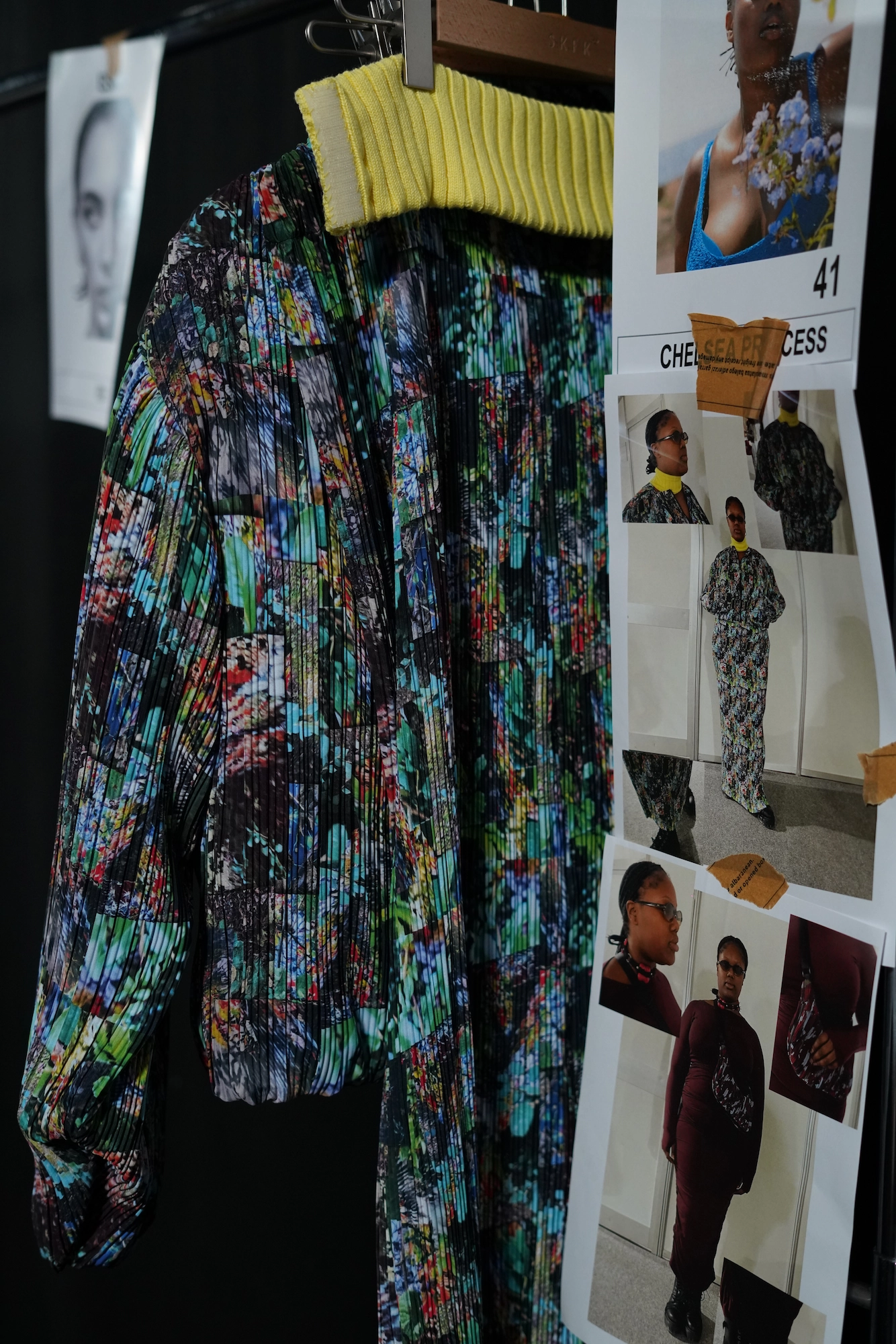
The ready-to-wear line unfolds silhouettes that oscillate between the defined and the fluid without ever losing the thread. A palette drawn directly from the earth—ochres, moss greens, deep browns, untreated raw tones—that does not decorate, but situates. Total looks and colour blocking construct a visual narrative where texture takes precedence. Ribs that add structure without rigidity. Organic forms that soften the composition without dissolving it. A balance that is not accidental: it is the result of almost a year of research that the viewer’s eye receives in minutes, without fully knowing why it feels so coherent.
“The body not as a support, but as a starting point”
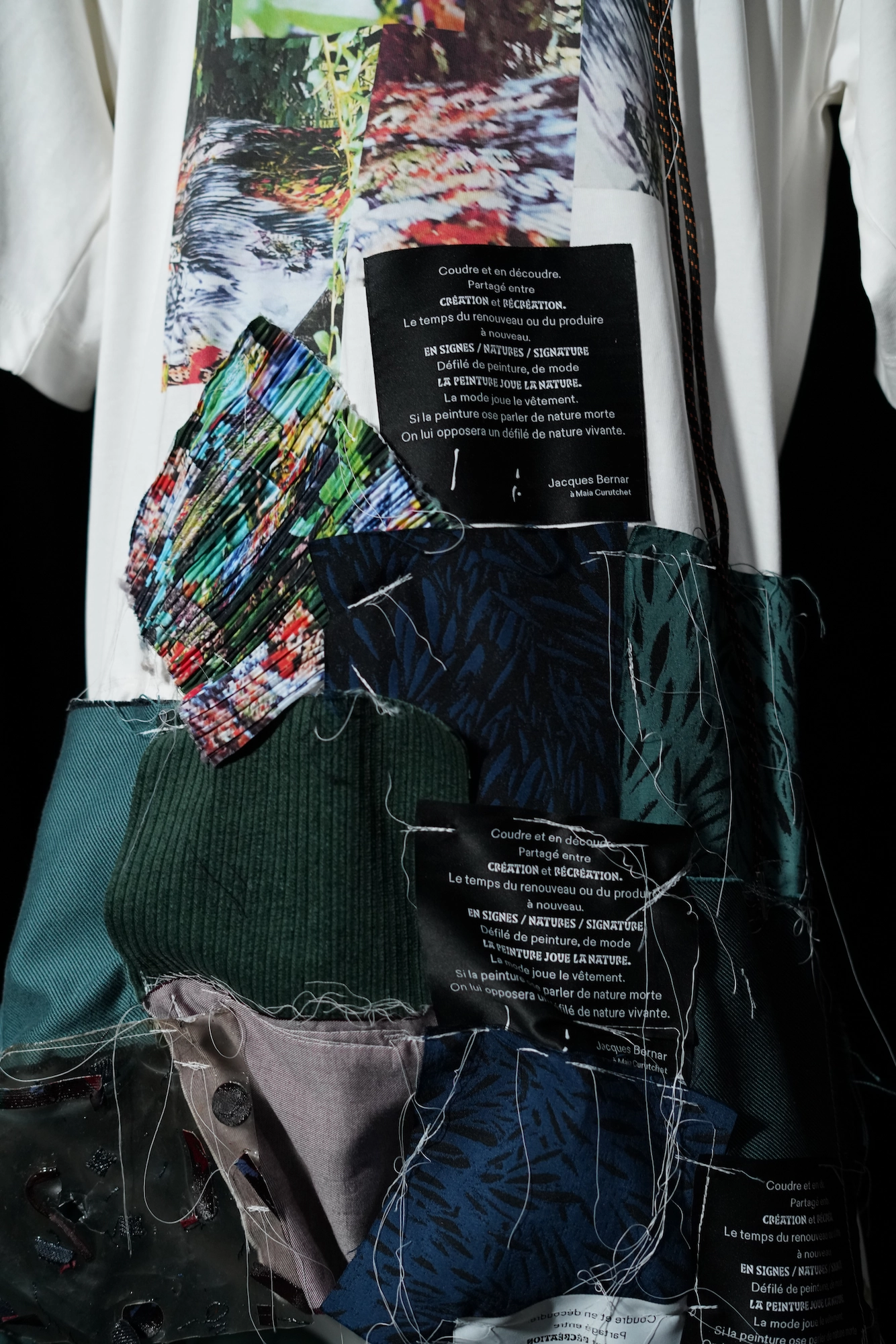
But where the collection reveals its most intimate dimension is in the special pieces. Each one handmade, through a collective process that brought together designers, artists, and biomaterials researchers. Braided bustiers that merge manual and industrial techniques. Biomaterial plates applied onto garments and accessories that generate volume without imposing themselves. Free-stitch embroidery on water-soluble fabric, adding a visible layer of time to each piece. Threads made from algae. Natural dyes from hibiscus, spirulina, agar-agar, and orange peel, collected on the Basque coast. Sculptural ceramic accessories entirely handcrafted. Hats that reinterpret Bilbao’s iconic medieval headpieces through a fully contemporary lens, also evoking historical military uniforms in a gesture that blends tradition, functionality, and experimentation, without any of the three elements ever dominating the others.
And above all, the txalaparta played live. Not as atmosphere. As affirmation.
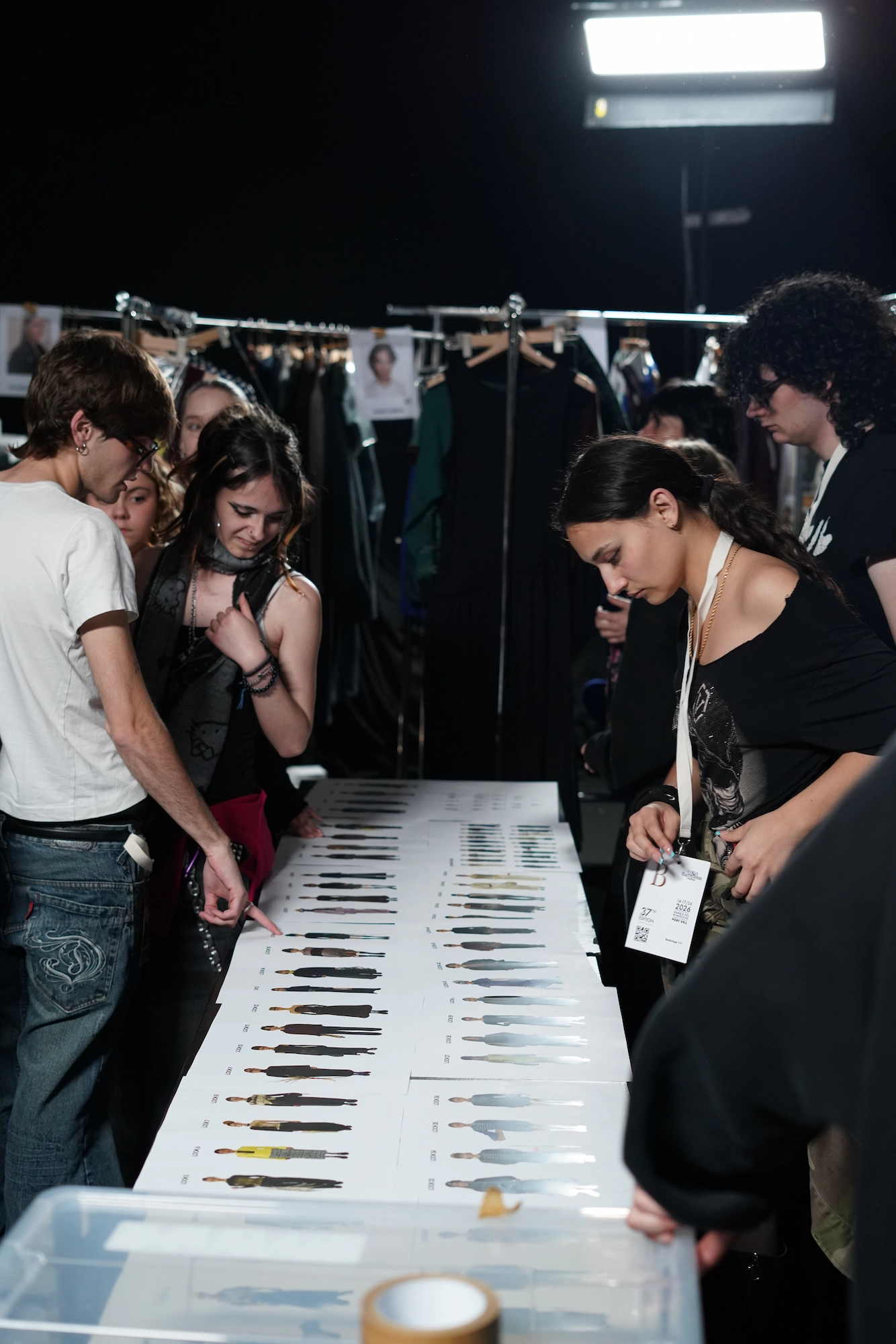
Backstage, that intention became almost tangible. Between fittings, textures and quiet gestures, there was a sense of focus and calm that contrasted with the usual pace of a runway environment.
Everything seemed built from attention, from time, from precision—letting the process remain visible, even when it is no longer seen.
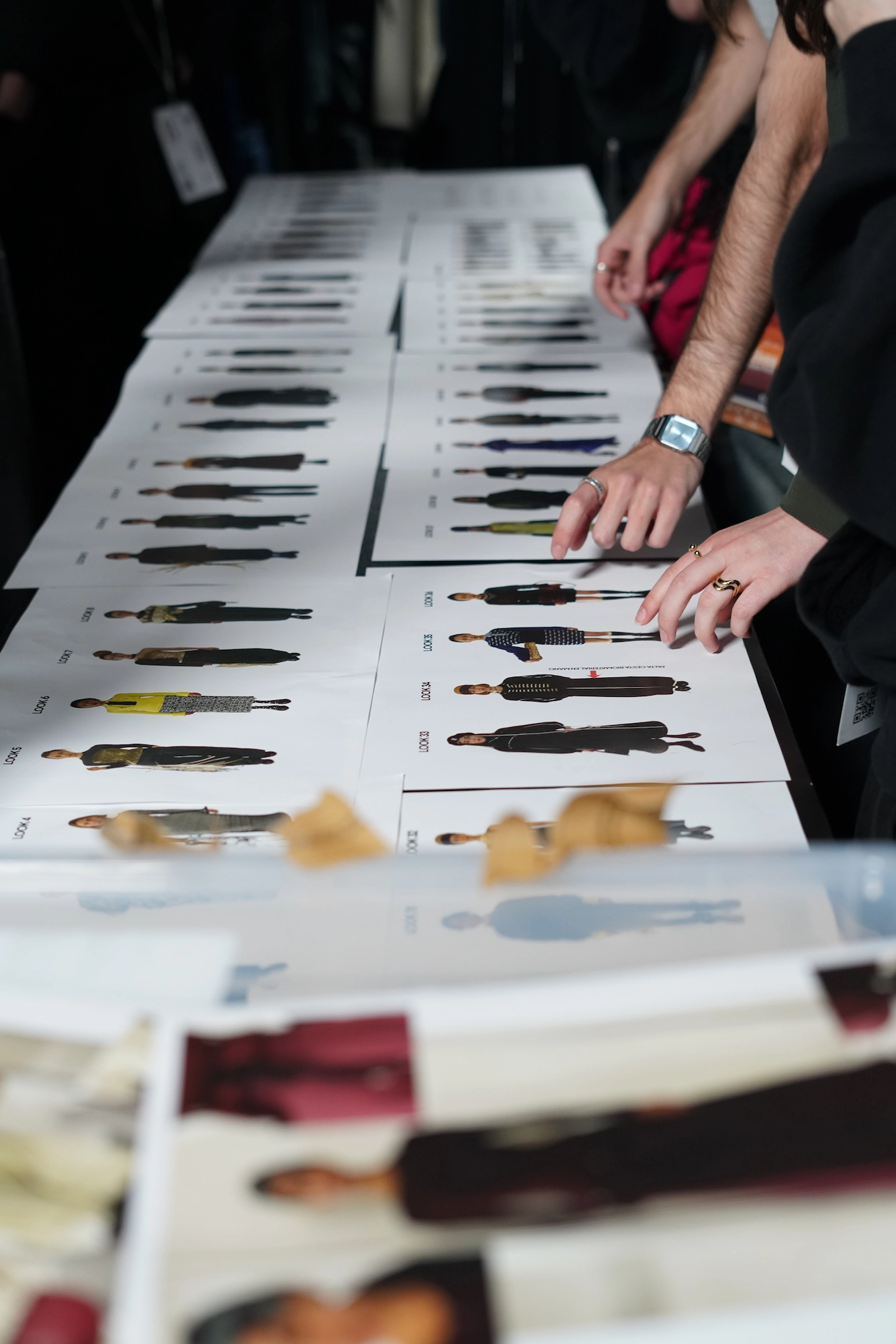
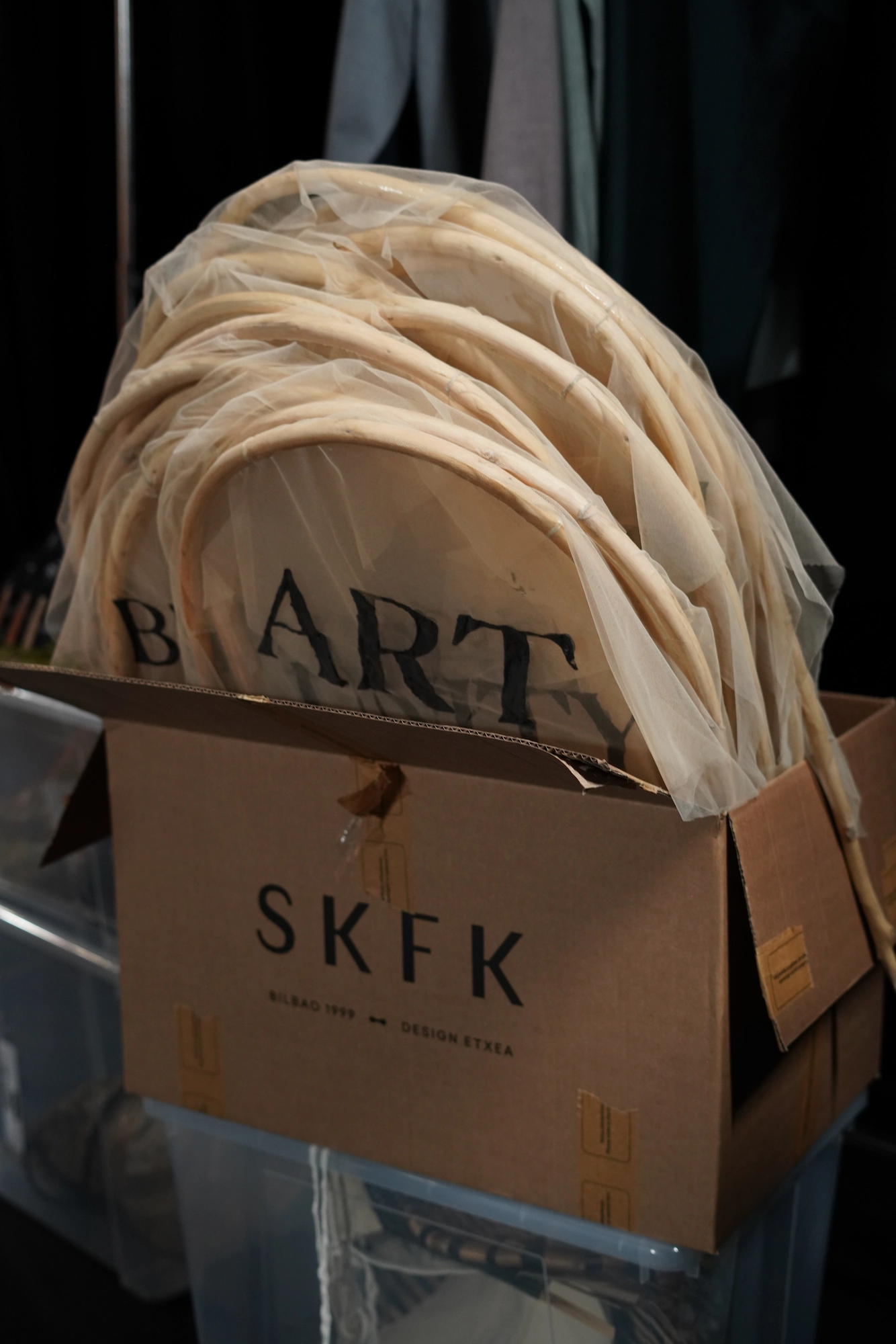
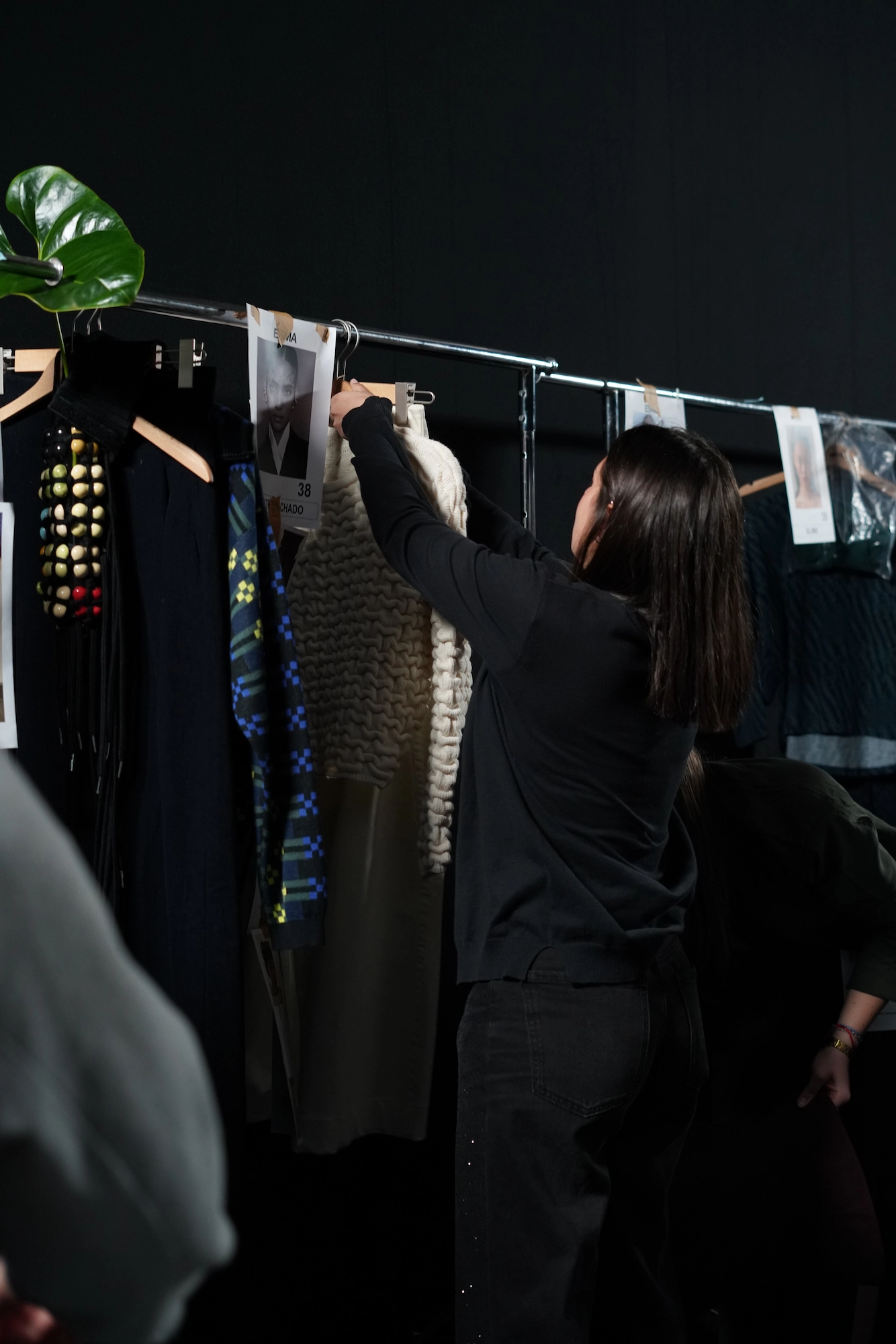
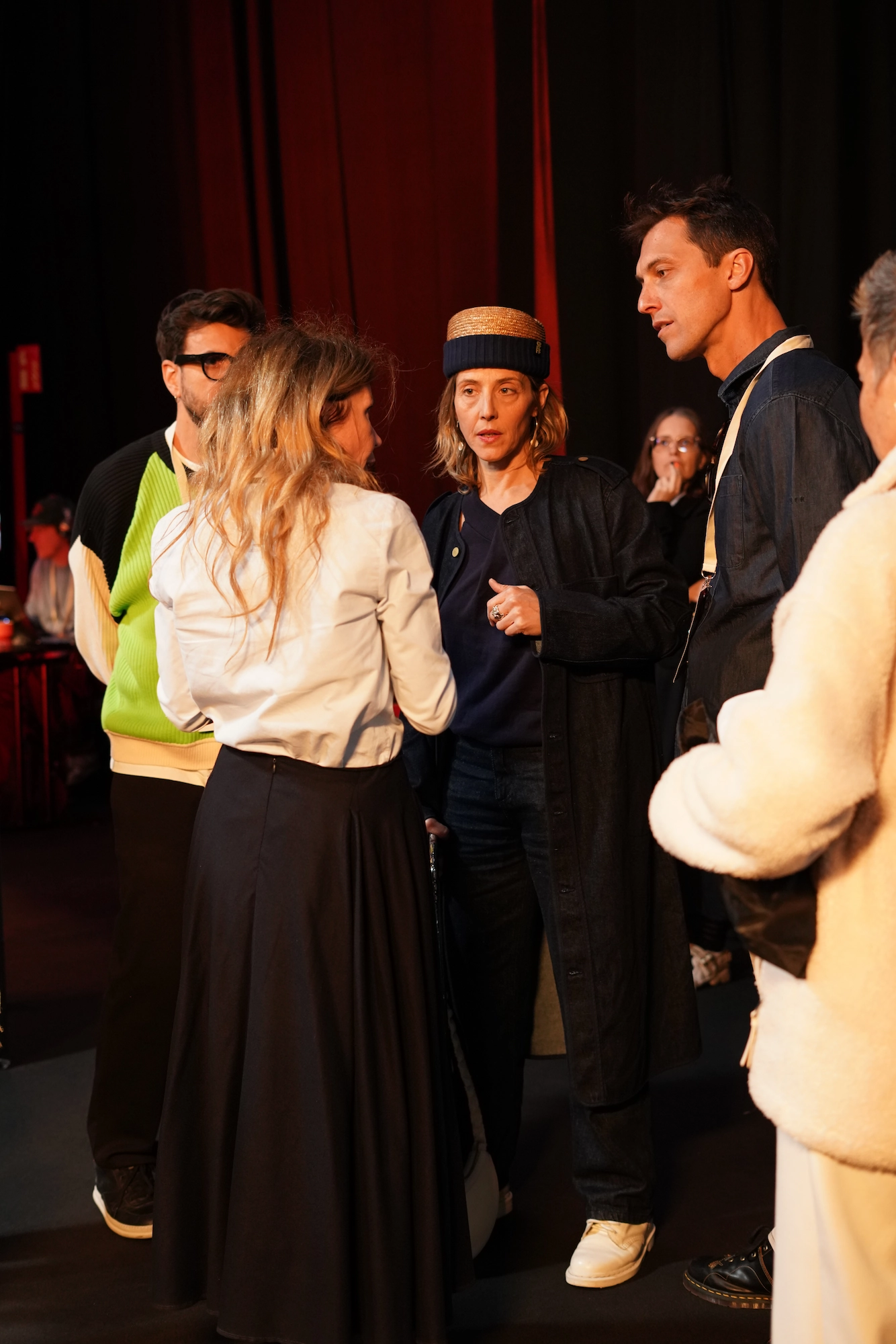
“For this collection, we were interested in working with connection from the physical and tangible. How the garment meets the body, how it accompanies it, and how it transforms with it.” — Maia Curutchet, Creative Director of SKFK
A fashion that remains
There is something profoundly subversive in SKFK’s proposal, and it is not announced. It is demonstrated. With every collection. With every material traced back to its origin. With every artisan whose name they know. With every garment designed not to be replaced, but to transform with the person who wears it.
In a sector that has made speed its only language, they spend almost a year on each collection. In an industry that renders processes invisible, they make them protagonists. In a market that celebrates the ephemeral, they design from permanence. And on a runway that often becomes pure spectacle, they presented something more difficult and more valuable: an experience felt in the body, not only in the eyes.
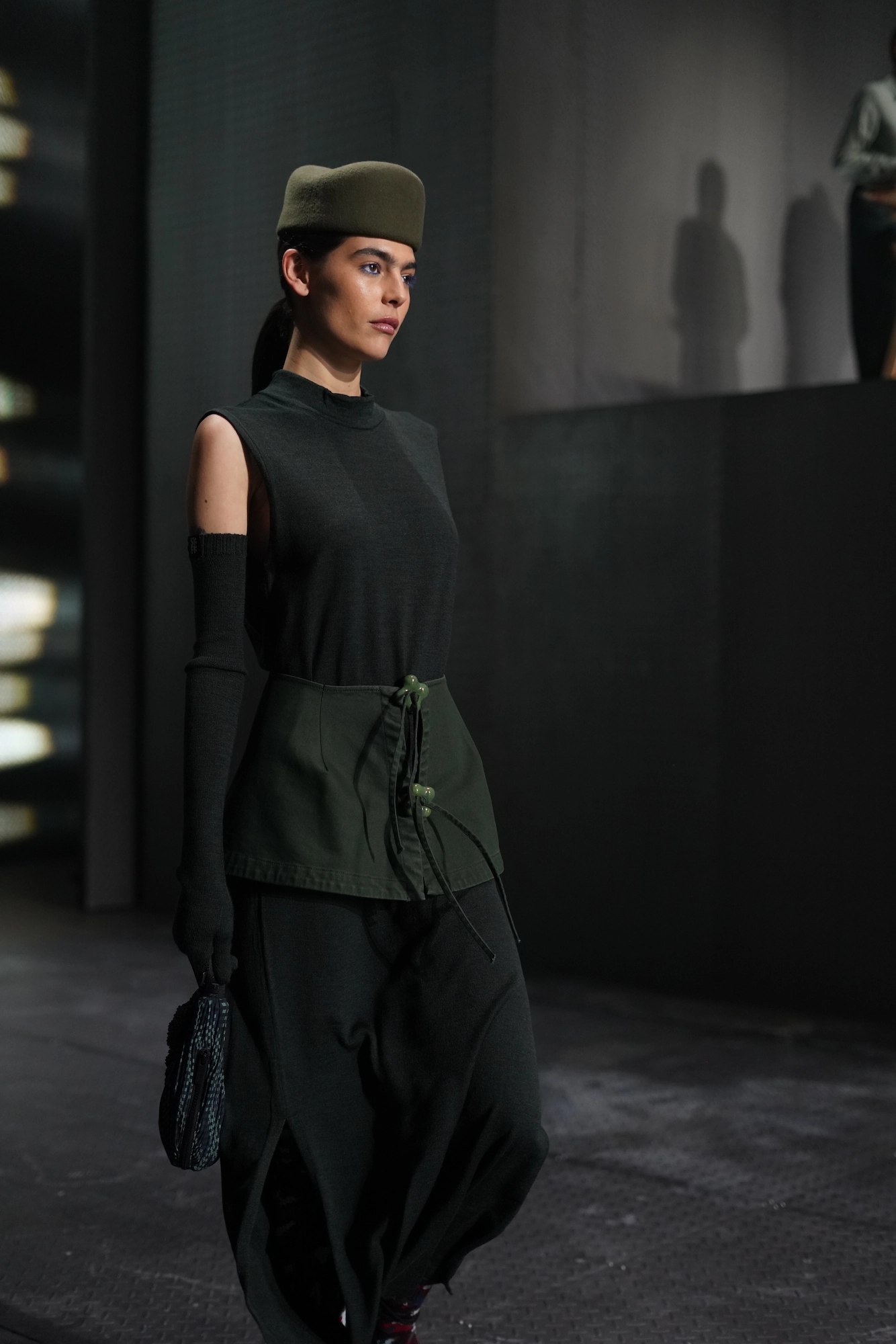
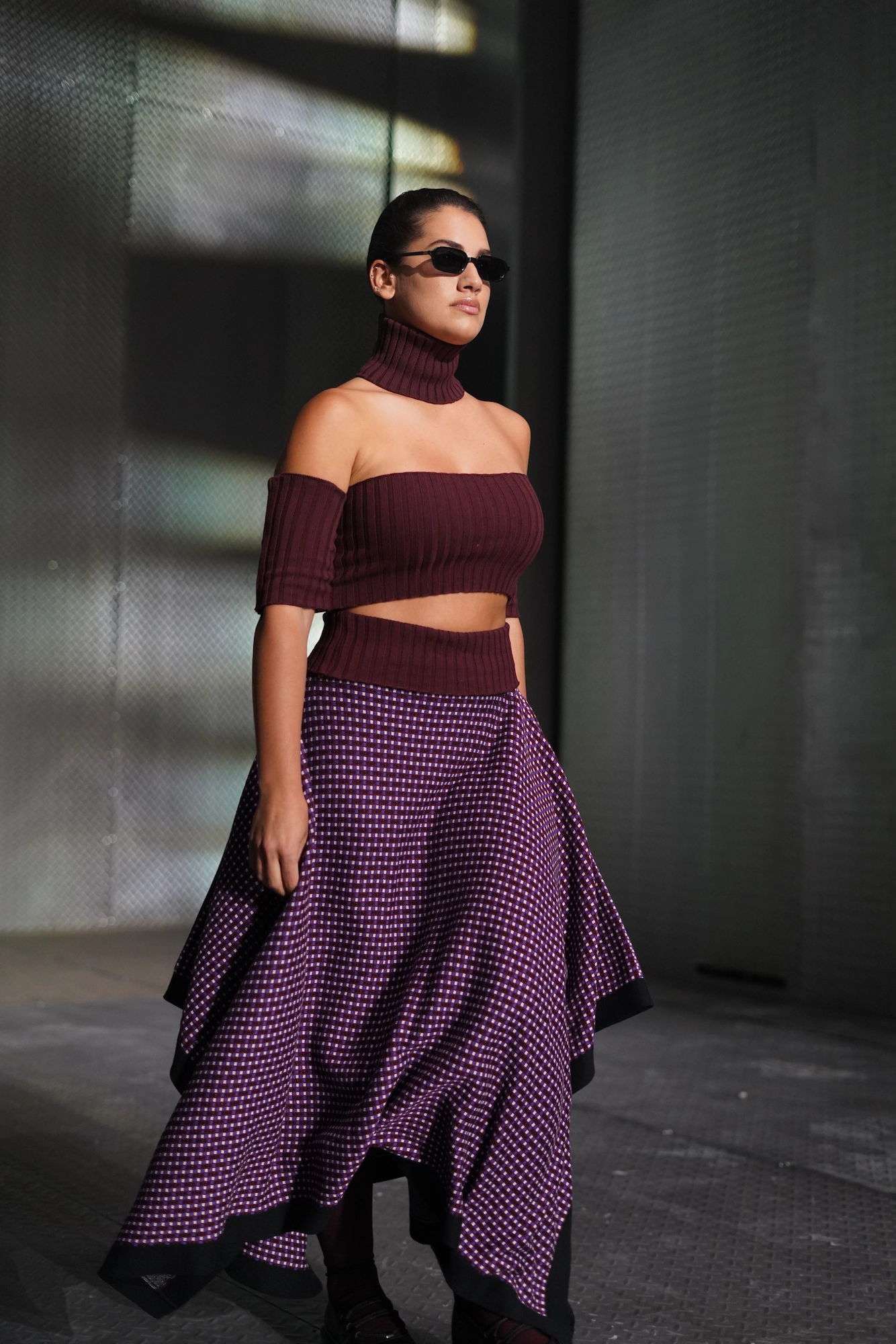
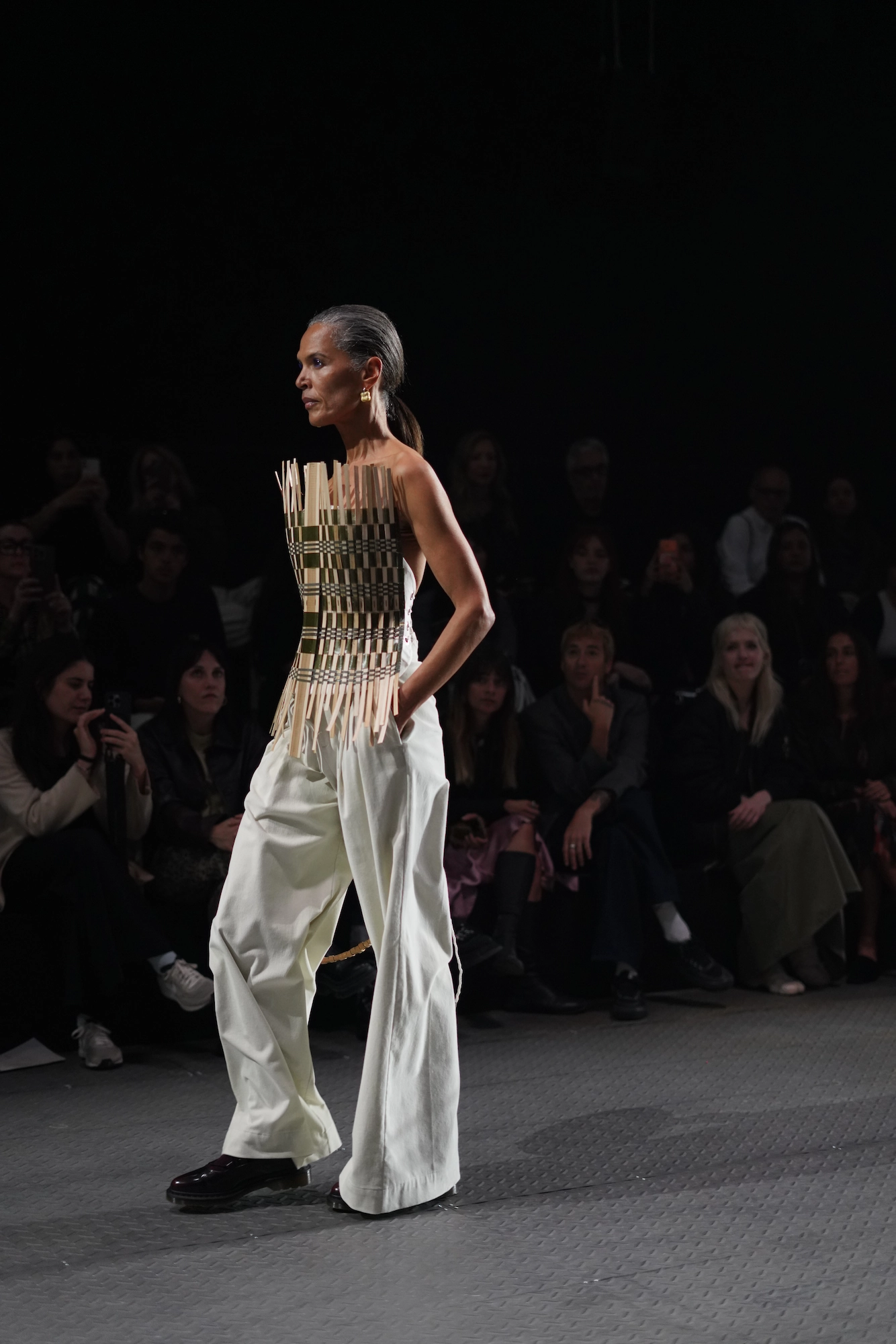
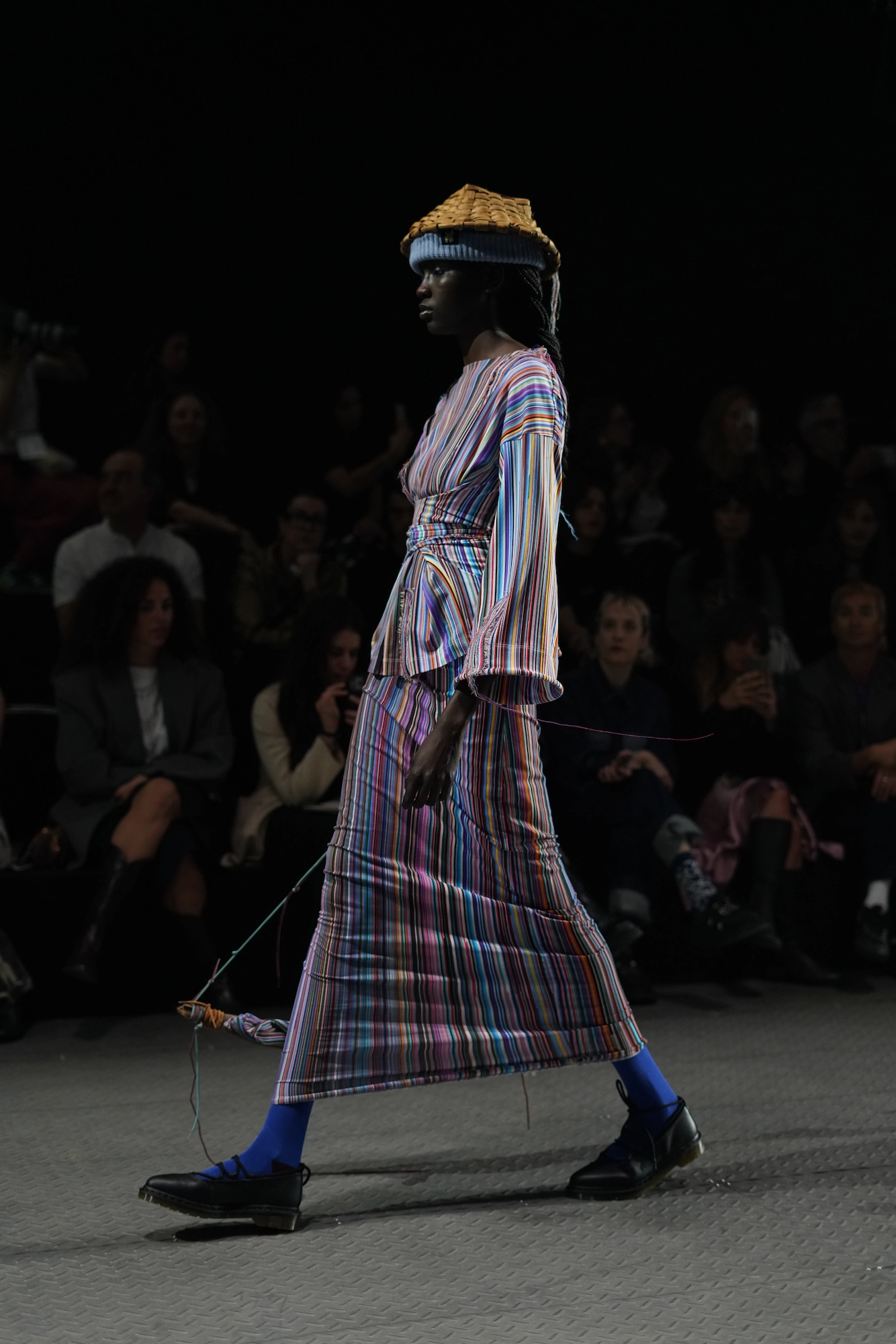
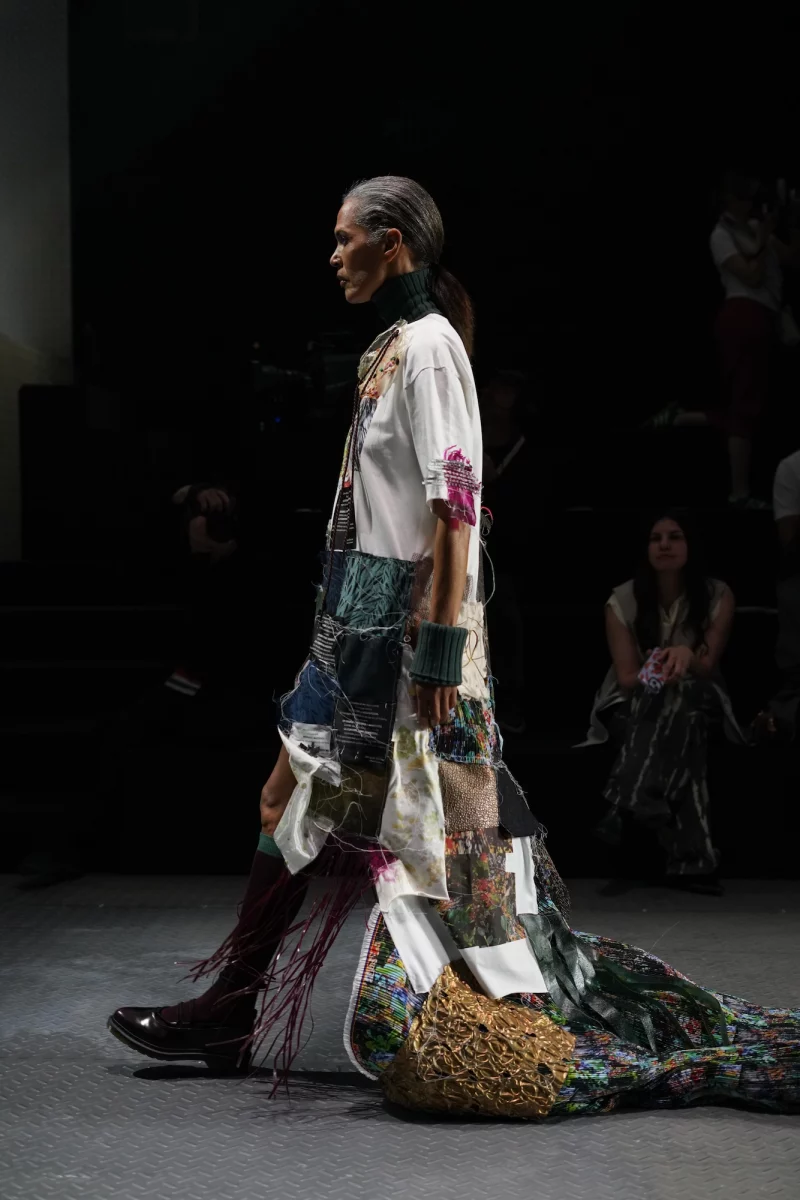
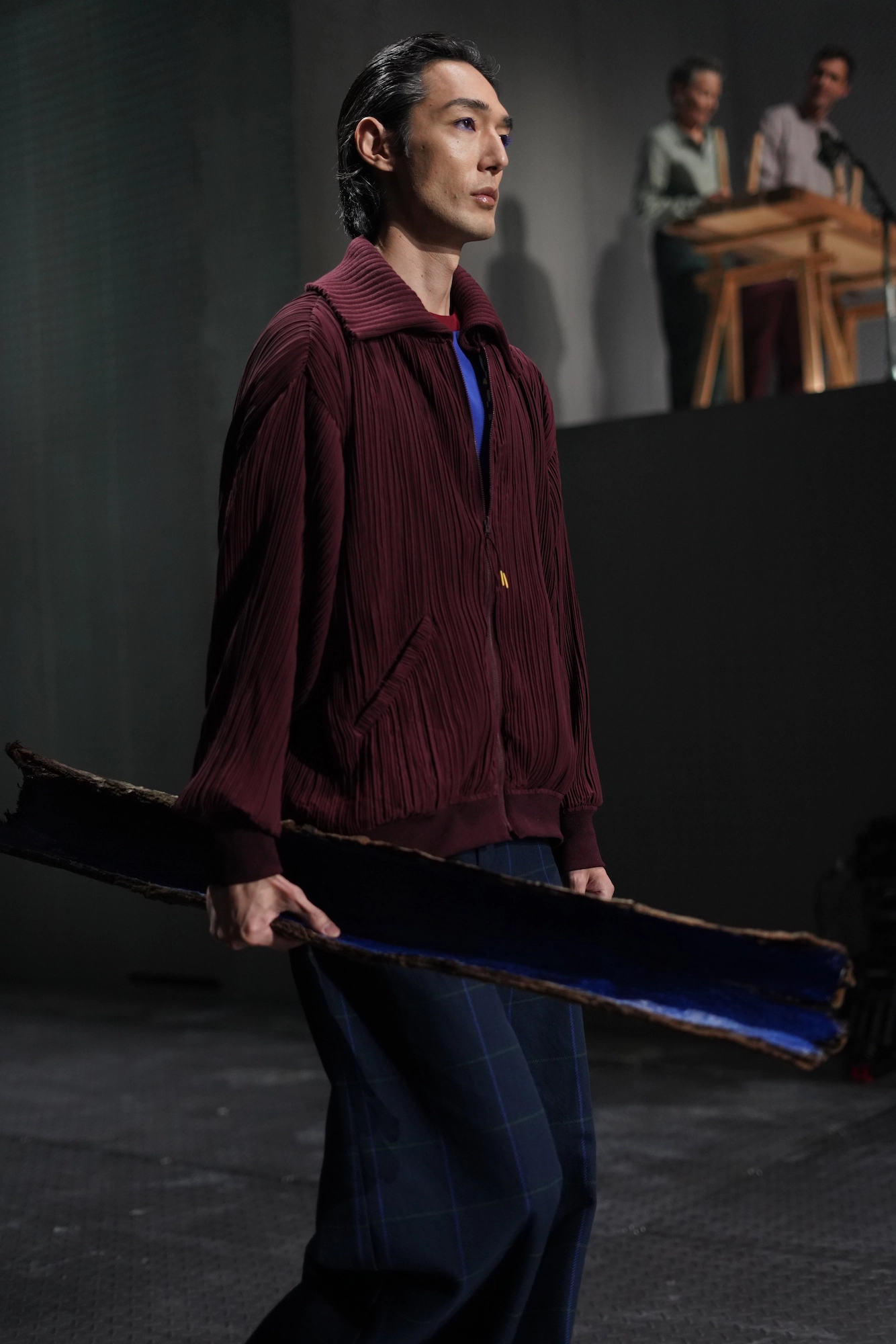
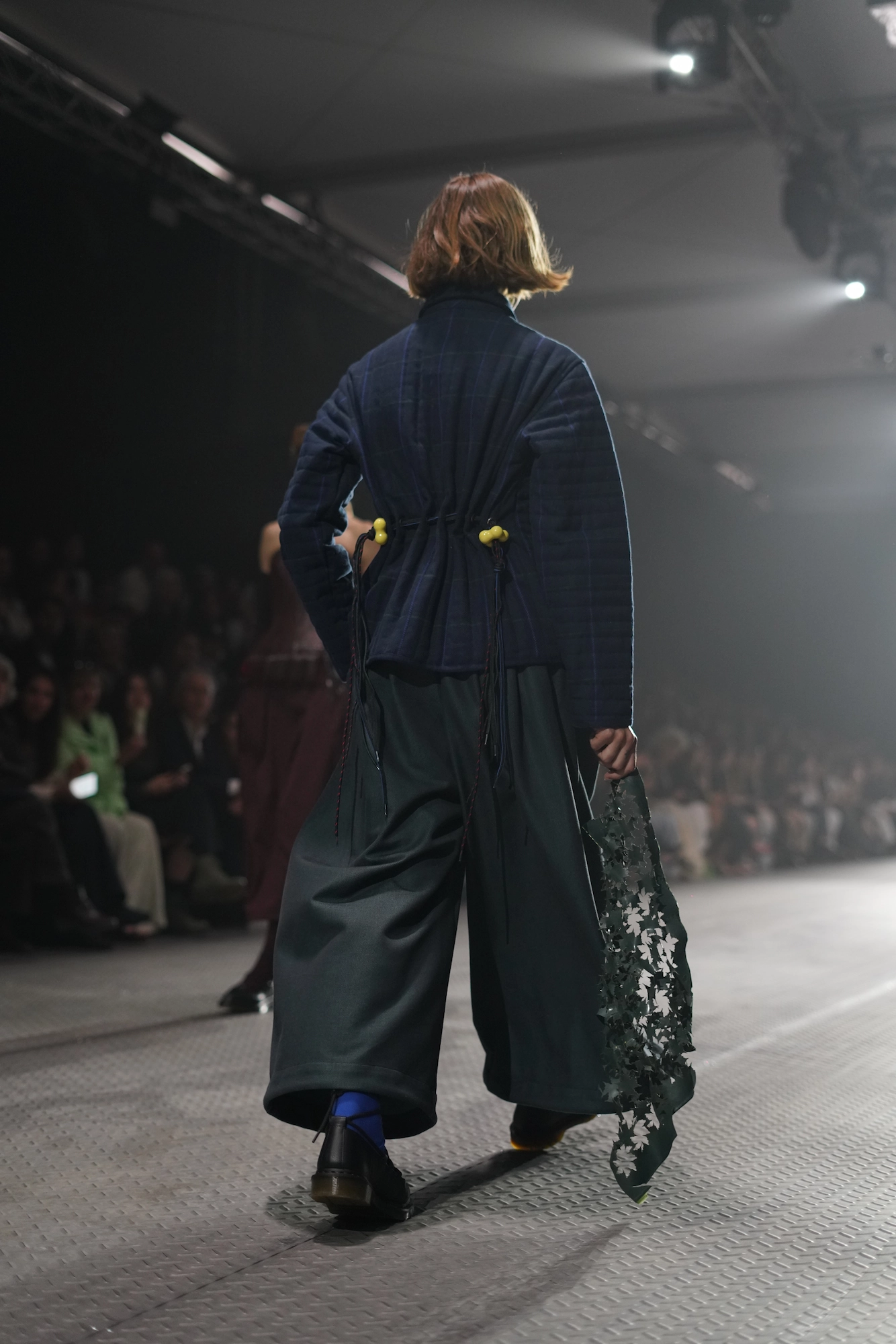
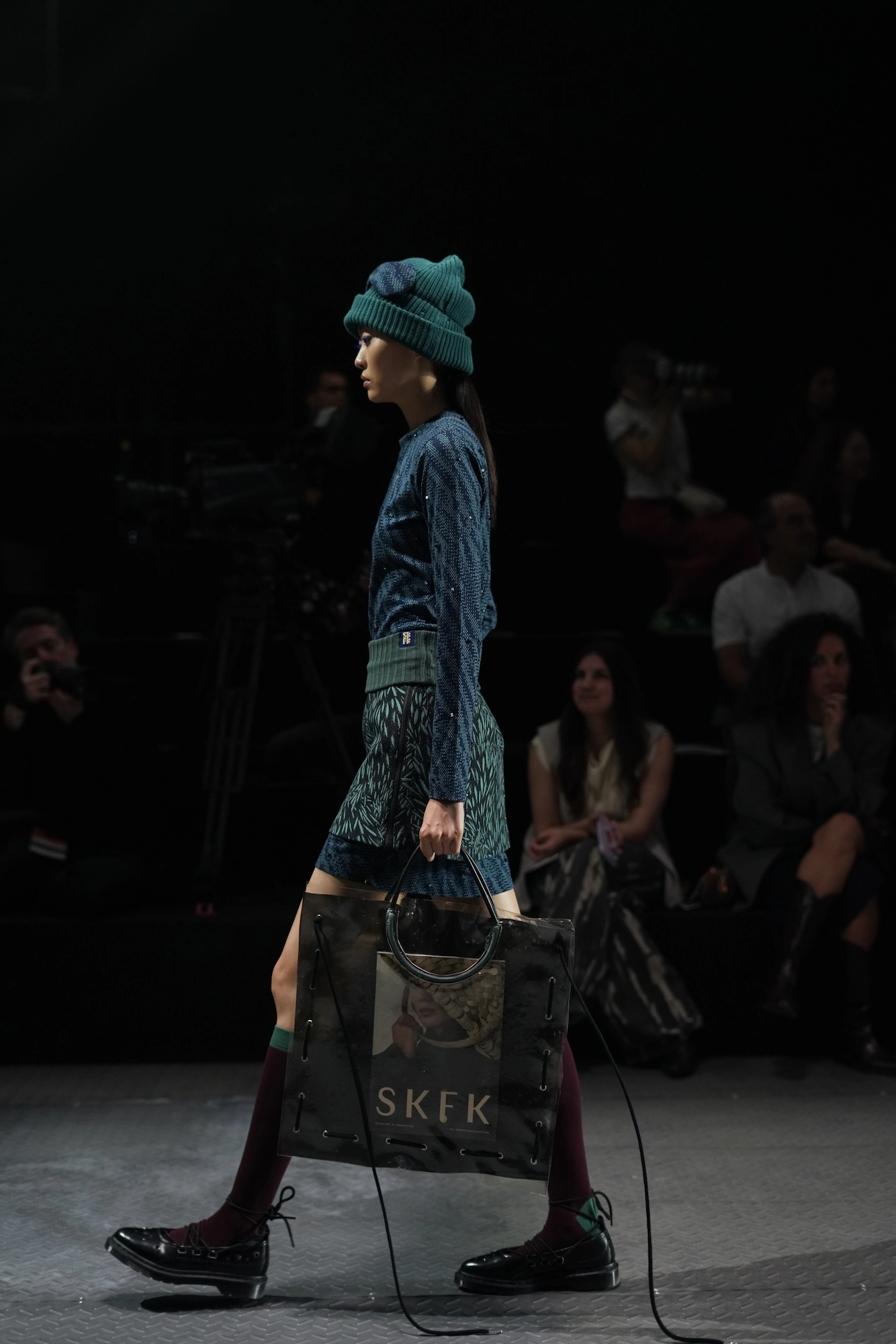
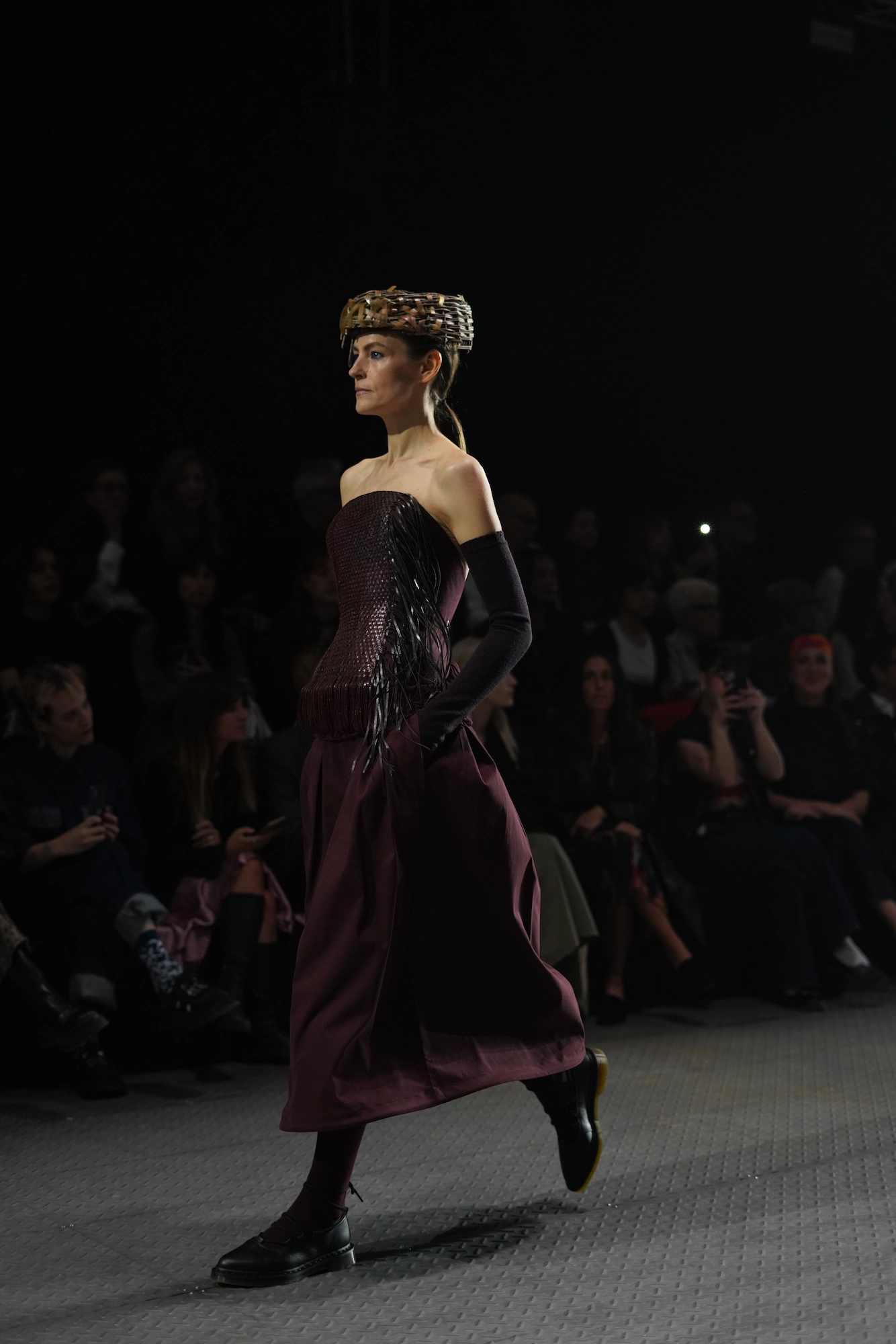
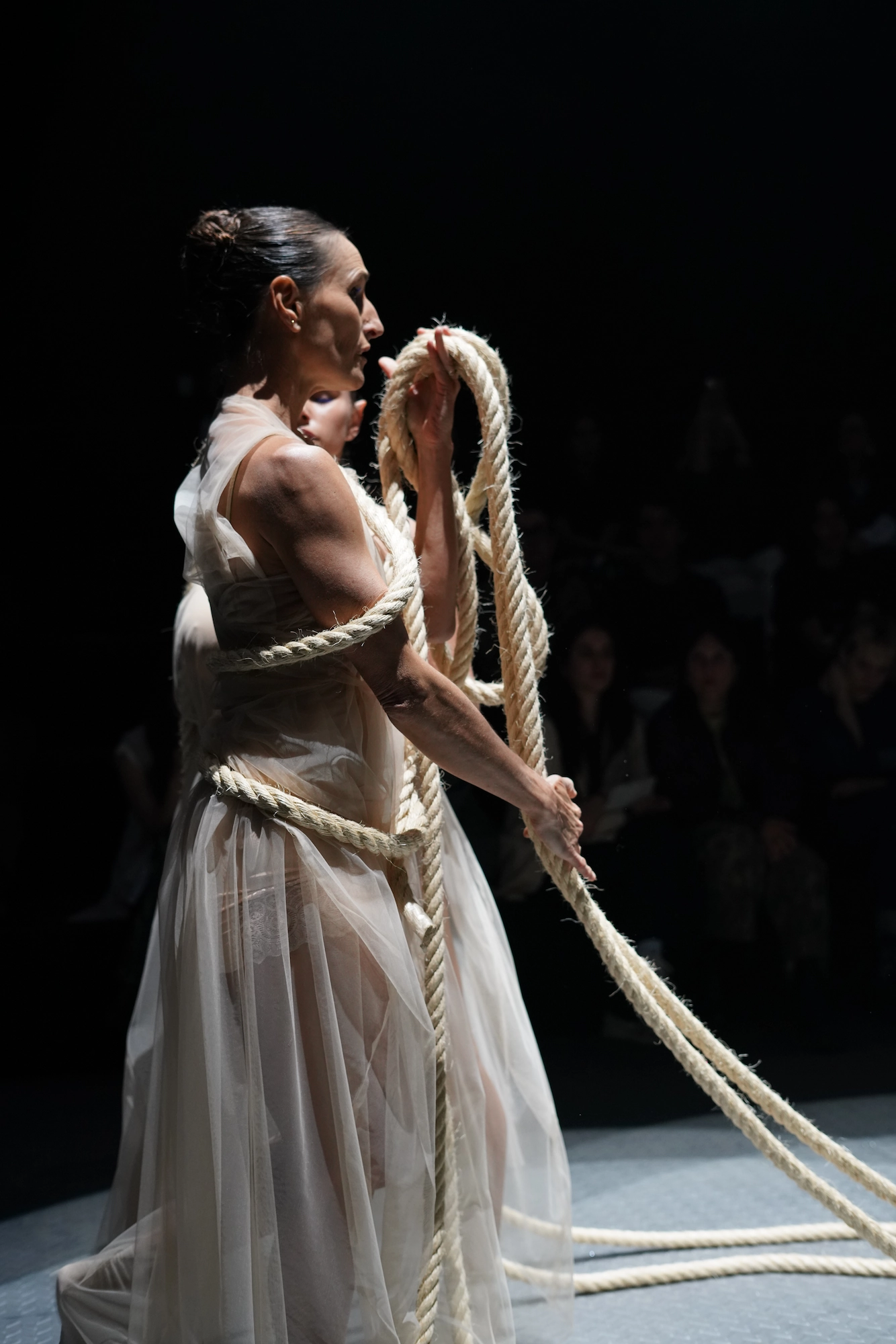
LOTURA is, in its most honest essence, a question formulated in the form of clothing: what happens when what you wear does not try to impress you, but to accompany you? The answer is woven. It is dyed with what grows along the coast. It is braided through many hands. And when it reaches the runway, it does not seek applause. It seeks resonance.
Which is, in the end, the only thing that lasts.
“In a market that celebrates the ephemeral, they design from permanence”
What binds us cannot always be seen.
At ÉTER, we are drawn to fashion that does not seek to impose itself, but to question what lies beneath it — who creates it, what remains after it, and what it means to dress with intention in a world defined by speed.
SKFK has spent more than twenty-five years returning to those questions through material, process, and collaboration. What emerges is not a declaration, but a continuity between what is thought and what is made. That coherence does not need to announce itself — it is already embedded in the way each piece comes into being.
And in that space between the visible and the invisible, what binds us cannot always be seen.
Discover more about SKFK