
A conversation with the founders redefining fashion, moving from aesthetic gesture to a conscious and almost spiritual act of dressing.
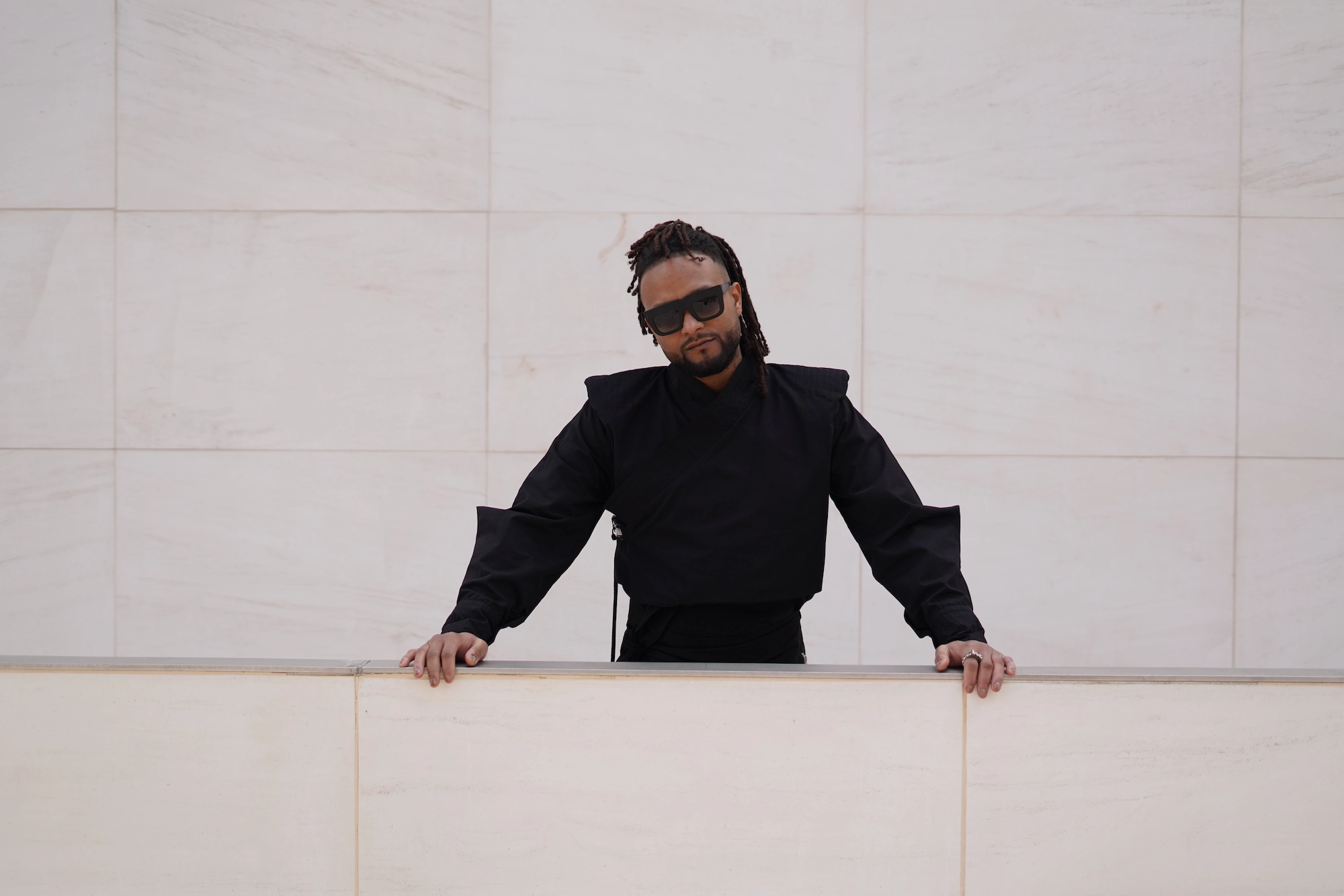
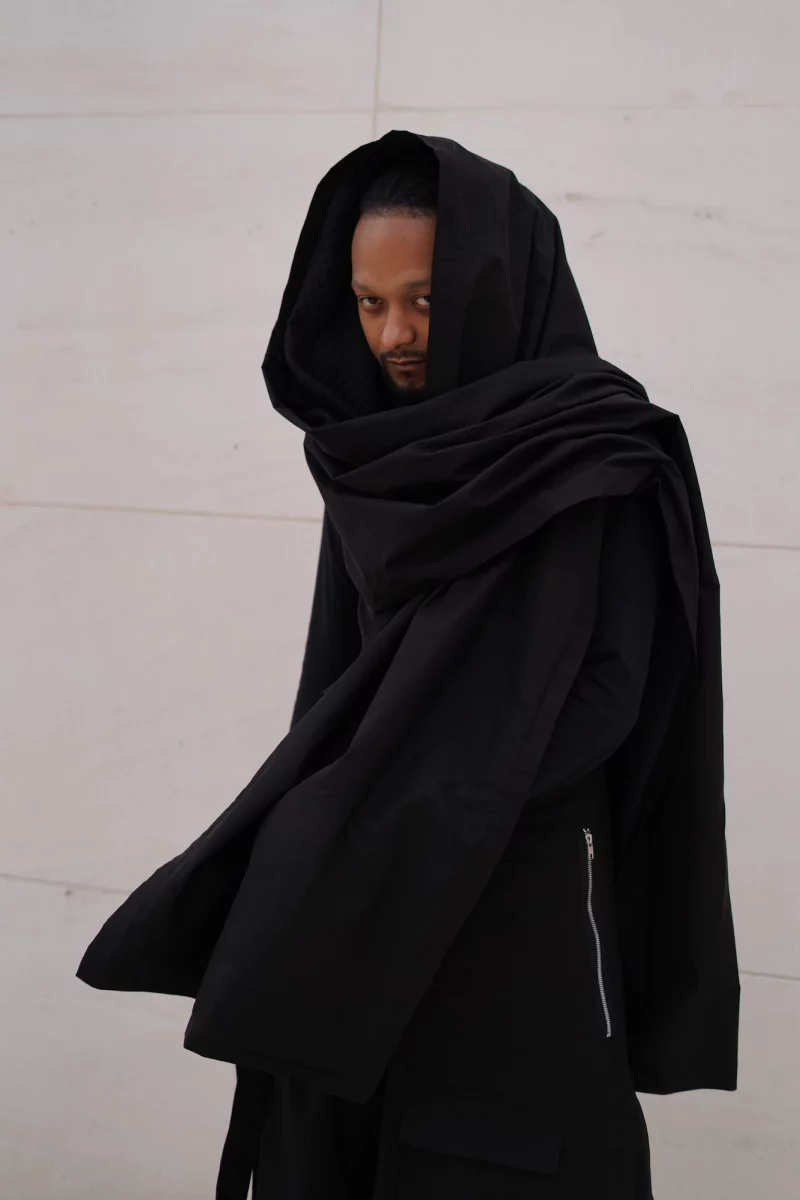
In the creative heart of Barcelona, ANATHEMA emerges as a brand that does more than dress the body — it proposes an aesthetic philosophy: Conscious Avant-Garde. For them, fashion is not a trend, but a ritual of introspection and presence.
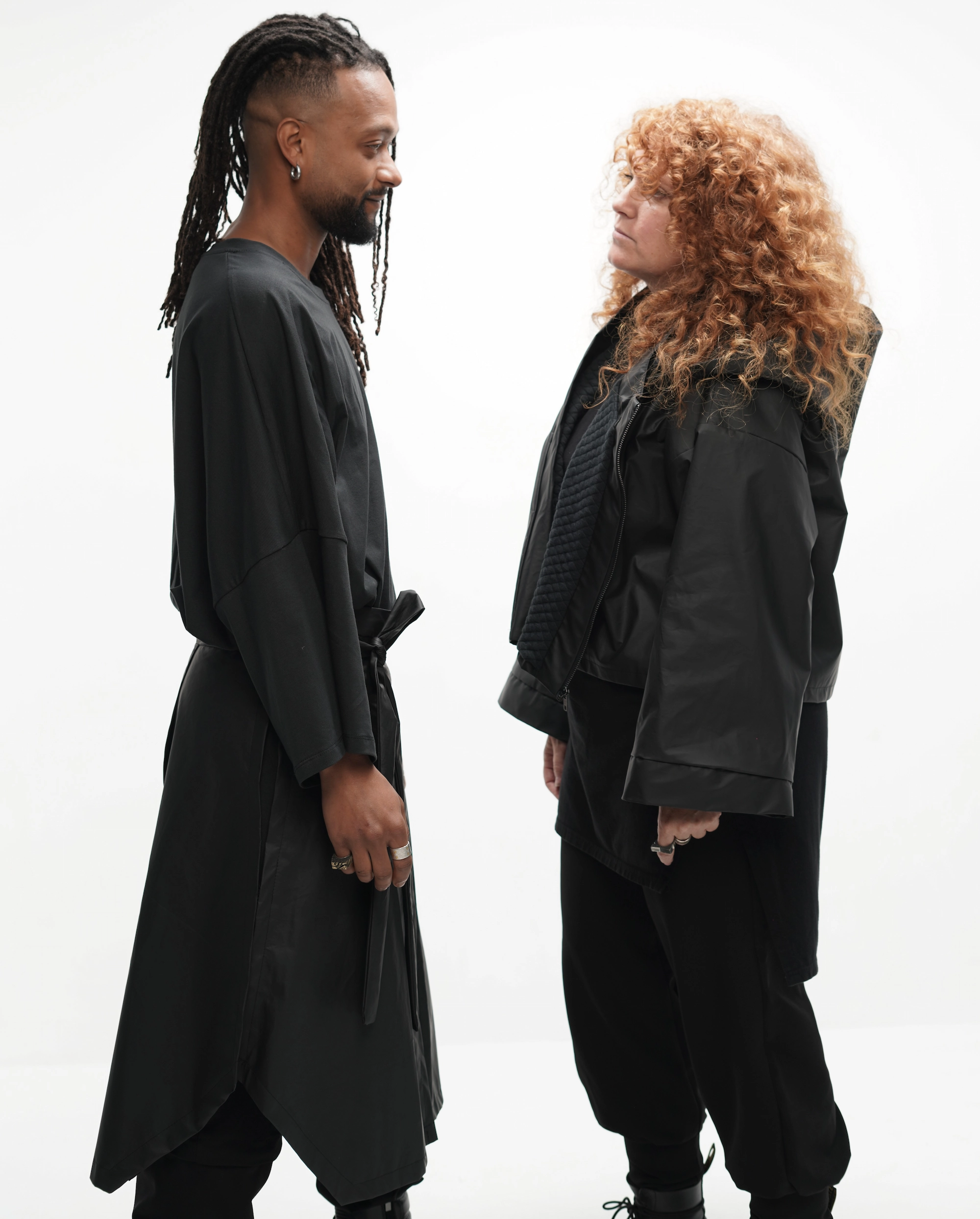
Who is behind ANATHEMA?
• Jadal Mbandakasa
The creative mind behind ANATHEMA. He conceives, designs, and brings each garment to life, translating abstract ideas into form, volume, and aesthetic language.
• Debora Morabito
The structure that sustains the project. From strategic and organizational direction, she transforms the vision into a solid system, giving coherence and direction to the brand.
How did ANATHEMA come to life?
It started in 2018, with a name: A.R.O. — Anathema Ride Out. Something intimate, built slowly alongside our regular jobs, without expectations and without a plan.
It came from a very specific need — Jadal’s need to create something he simply couldn’t find. The avant-garde aesthetic we loved — black, conceptual cuts, layering — existed, but not in a way that felt accessible or honest. So he started drawing.
The first piece was a long black T-shirt. Seeing it go from a sketch on paper to something real, something you could actually hold and wear, was a deeply emotional moment. It sounds simple, but it changed everything. It made the whole thing feel possible.
From that first T-shirt came the kimonos, the trousers, and eventually the first real collection in 2022. In 2023, we were selected for Barcelona Fashion Forward, which marked a turning point. The project finally had a shape, a name — ANATHEMA — and a direction.
Why do you choose black as the exclusive color in your collections? and How does ANATHEMA define the concept of “Conscious Avant-Garde”?
The two questions are connected — and the answer to both begins in 2023.
Before Barcelona Fashion Forward, we explored other directions: browns, military greens, black and white combinations in some T-shirts and trousers. We were not closed to color. But after that experience, something shifted. We knew. Total black was no longer just a preference — it was the only choice that truly felt like ours.
Black is not a stylistic choice — it’s a philosophical one. It is the absence of distraction, a color that does not compete with the person wearing it. Atemporal, powerful, versatile — radical in its restraint. The most silent choice, yet at the same time the most extreme. For someone who sees clothing as a reflection of their inner world, black becomes the only honest answer.
As for “Conscious Avant-Garde,” this is the concept that defines everything we do. It means fusing aesthetic innovation with a deeper purpose — not only environmental awareness or ethical production, although those matter too. It is a commitment to self-knowledge, personal growth, and exploring reality through design. The avant-garde has always been about breaking with what is accepted. We add the word “conscious” because breaking without awareness is just noise.
Why Barcelona, and how does the city shape your creative process? Jadal, how does your creative process unfold, and what drives your inspiration when designing?
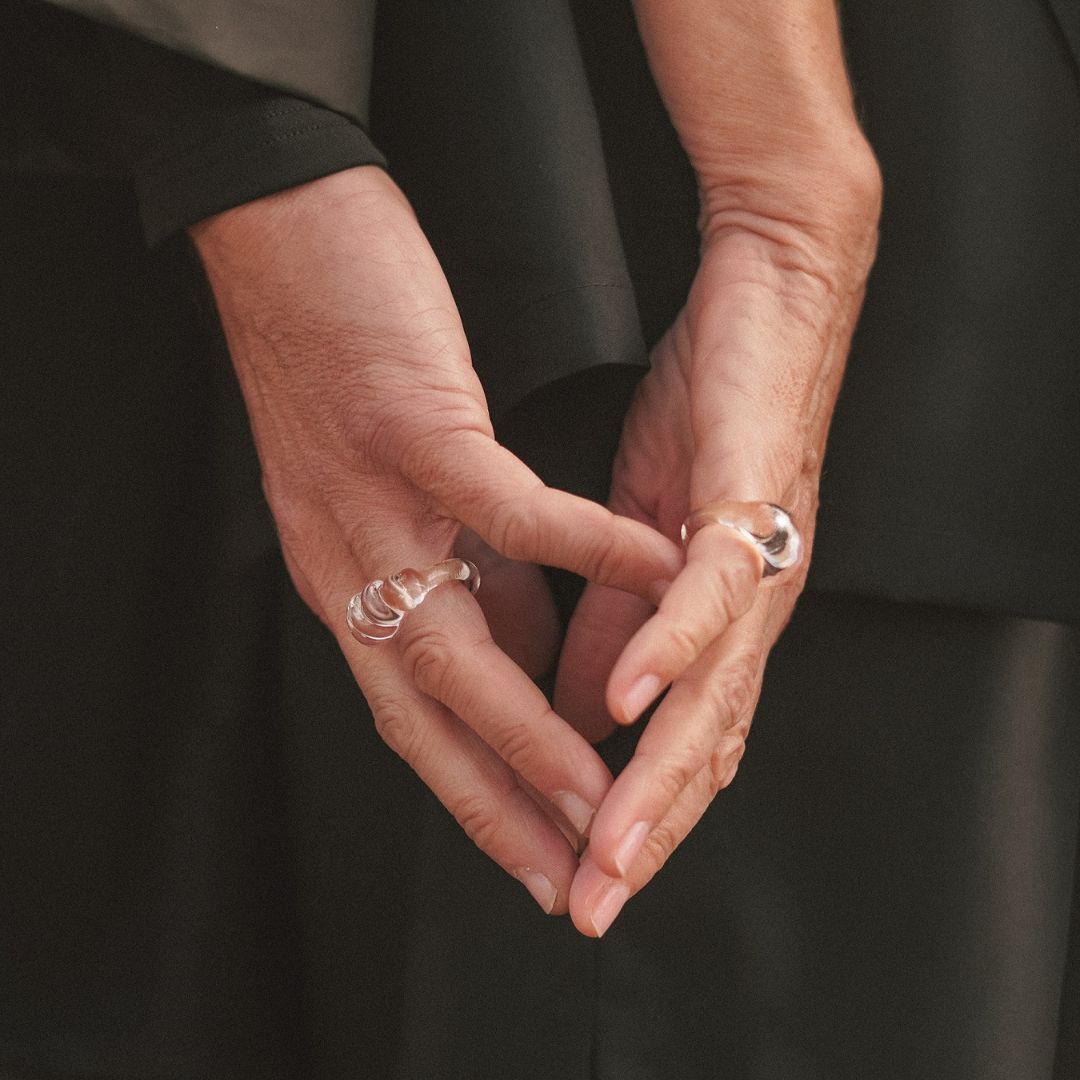
We feel that Barcelona chose us more than we chose it. There’s something in this city that holds contradictions without resolving them — vibrations, life, an energy that is sometimes difficult to put into words. We’re fully aware that what we’ve built here wouldn’t have been possible back in Italy. We’ll always be grateful for being brought here and for the opportunities that opened along the way.
Creatively, the process shifts. Sometimes it begins with a concept, sometimes with a silhouette — it depends on the moment, on the state of mind. But what always emerges is something that goes beyond clothing. I often ask myself: what does this garment need to mean before it needs to look like anything?
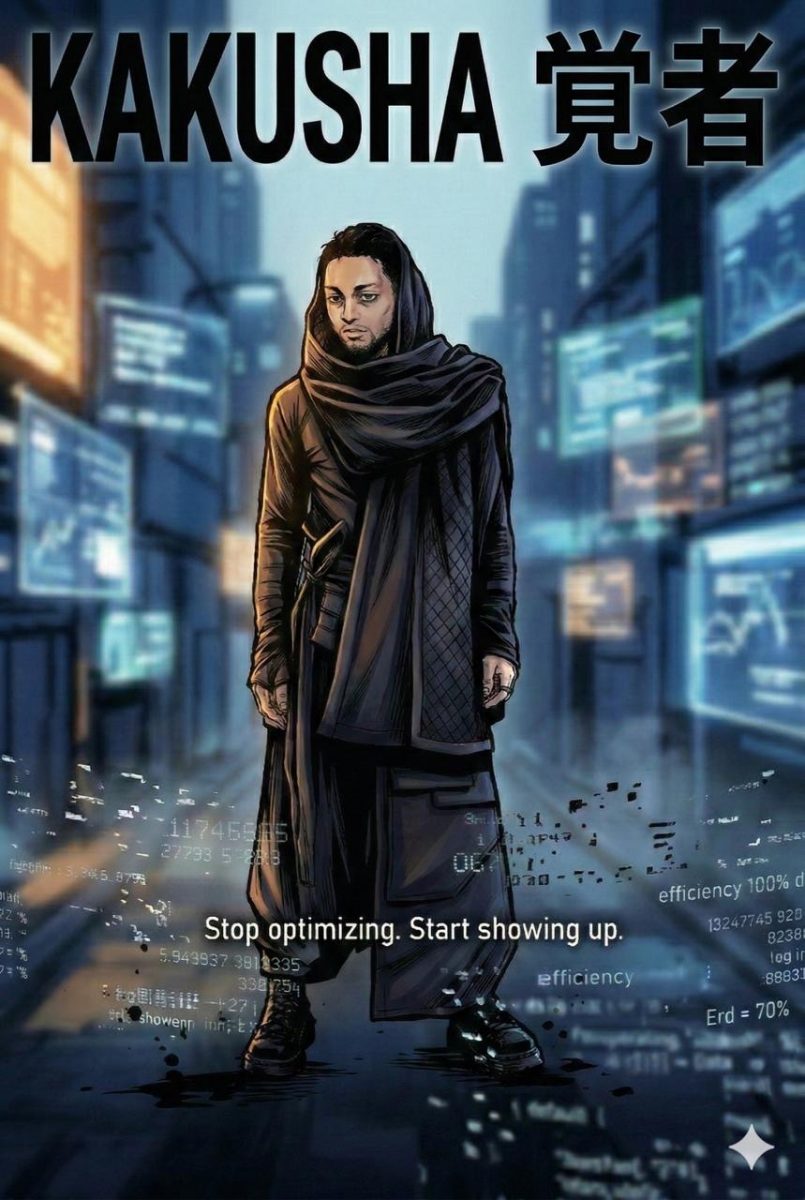
Our current collection is a good example. Each piece in Kakusha carries a kanji name — Rei (靈), Mon (門), Kai (界), Yoroi (鎧) — and that name isn’t decorative; it defines the intention behind the piece. The collection itself is not finished in any conventional sense. It doesn’t follow the seasonality of the fashion calendar — no spring/summer, no autumn/winter. It’s something that will accompany us throughout 2026, evolving gradually with lighter or more structured pieces.
Our inspirations draw from Japanese philosophy and aesthetics — wabi-sabi, the concept of dōgu, the relationship between tool and consciousness — as well as science fiction. Films like Star Wars and The Matrix don’t inspire us visually, but philosophically. The Jedi is the perfect archetype: a spiritual being living within a hyper-technological world, completely at home, fully himself. That’s the Urban Monk. That’s what we aim to express through our clothes.
“What does this garment need to mean before it needs to look like anything?”
What aspects of the current fashion system do you reject, and how do those tensions translate into the challenges you face when creating conceptual and ethical fashion?
We reject speed. We reject volume. We reject the idea that clothing is content.
The current fashion system is built on optimization — producing more, faster, cheaper, louder. We work in the opposite direction. Natural fibers and deadstock fabrics sourced from European suppliers. Every piece is produced in our Barcelona workshop, in limited editions of 8 to 20 units. No mass replication. No seasonal pressure.
The challenge is real. Conceptual and ethical fashion doesn’t fit neatly into the algorithms that drive discovery today. Our pieces aren’t designed to stop thumbs on a screen — they’re designed to carry meaning when held in your hands. It’s a slow conversation in a fast world.
But we’re not interested in fighting the system. We’re interested in transcending it. The problem isn’t technology — it’s using it without consciousness.
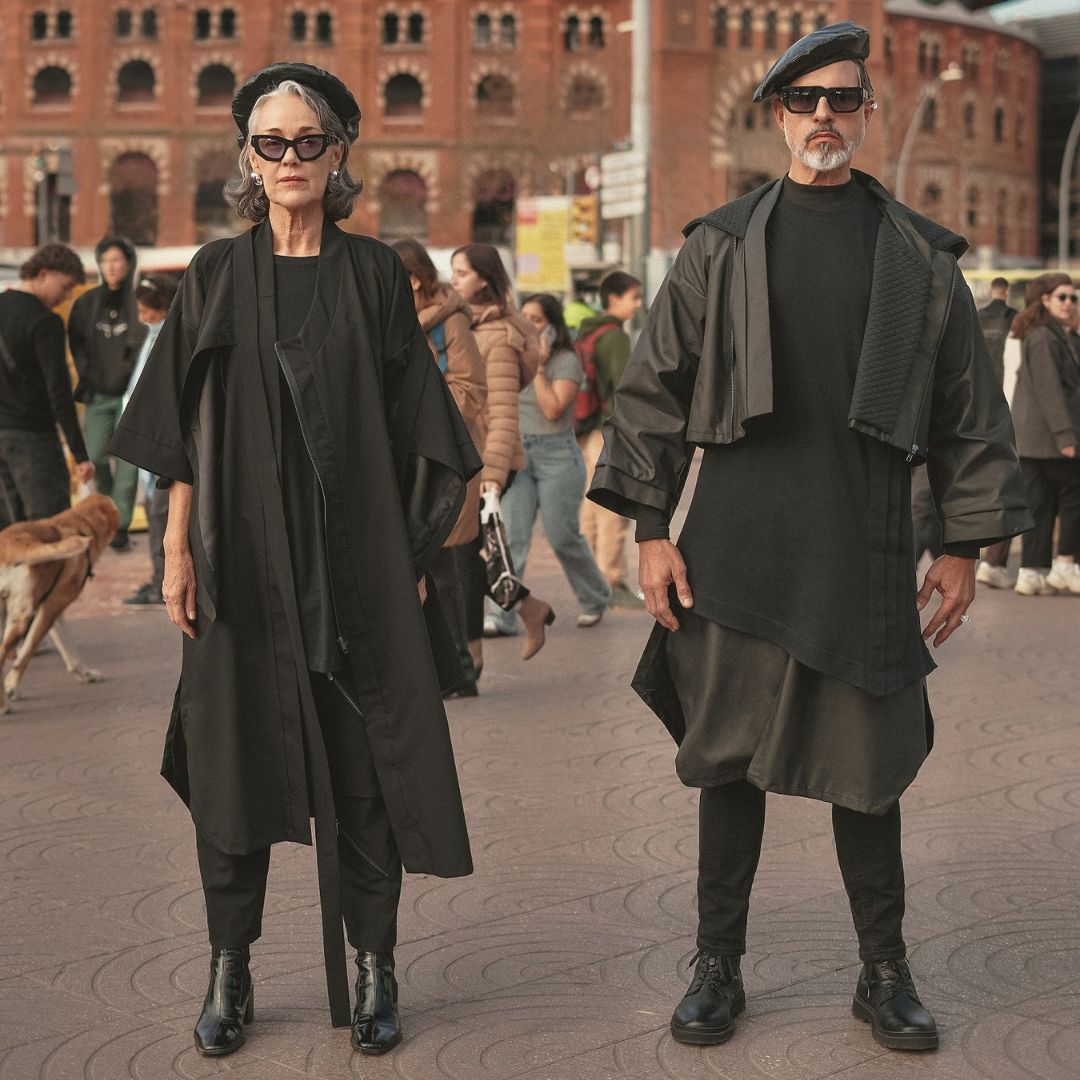
We also reject the visible logo, the trend cycle, and the idea that a garment’s value lies in its recognizability. A piece from ANATHEMA doesn’t announce itself. It reveals itself — slowly, to those who choose to look closely.
Where do you see ANATHEMA heading in the future, and what impact do you hope it has on fashion and consciousness?
We see ANATHEMA as an evolving universe.
The Kakusha collection is the first chapter of a larger system. Each future collection will carry its own philosophical territory.
Alongside the garments, we developed the Kakusha manga — a one-shot graphic novel that expresses the same philosophy through a dystopian narrative. The protagonist exists in a world where everything is optimized and classified by algorithm. He is unclassifiable. That’s the impact we hope to have: to remind people that being unclassifiable is not a flaw, but a strength — perhaps the most radical thing a human being can be.
In terms of fashion, we hope to contribute to a shift — away from fast consumption and toward intentional possession. A garment from ANATHEMA is not just something you wear; it becomes a reminder of who you are.
And in terms of consciousness — if even one person wears a piece from this collection and feels more present, more grounded, more themselves — that is enough. That is exactly what we set out to do.
“Being unclassifiable is not a flaw, it’s the most radical thing a human being can be”
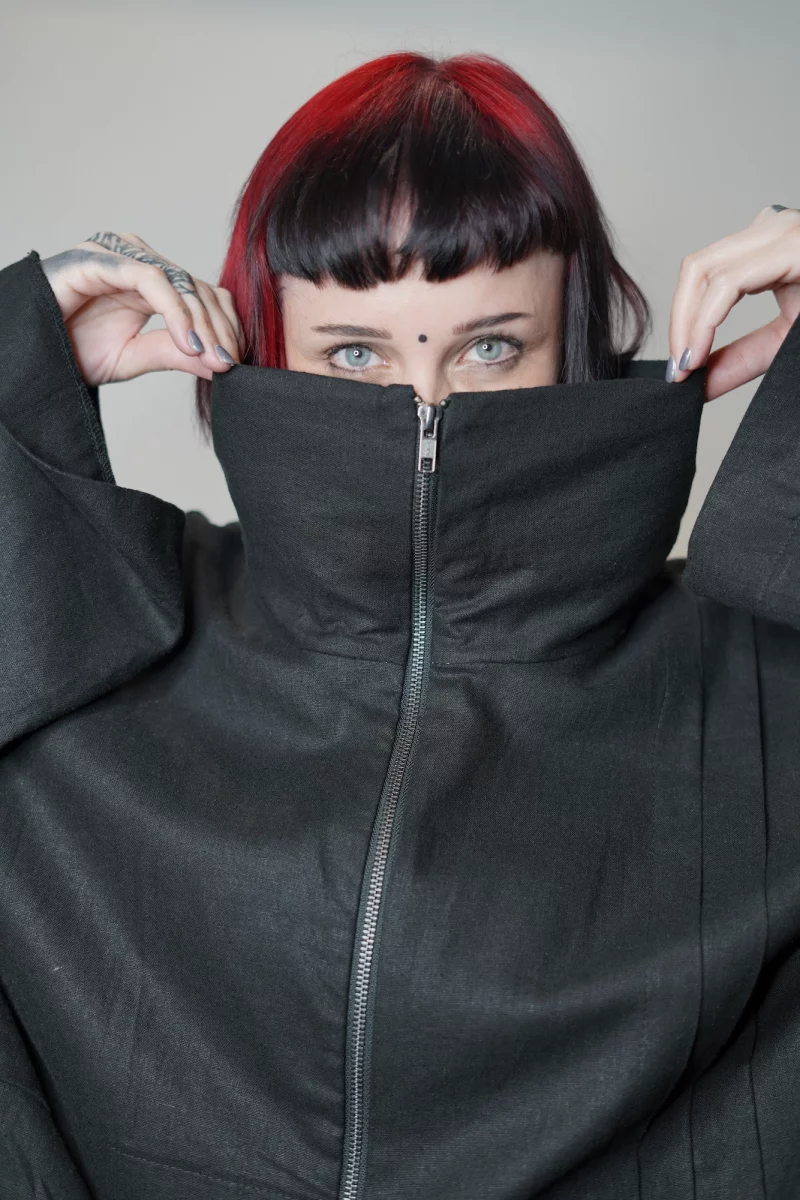
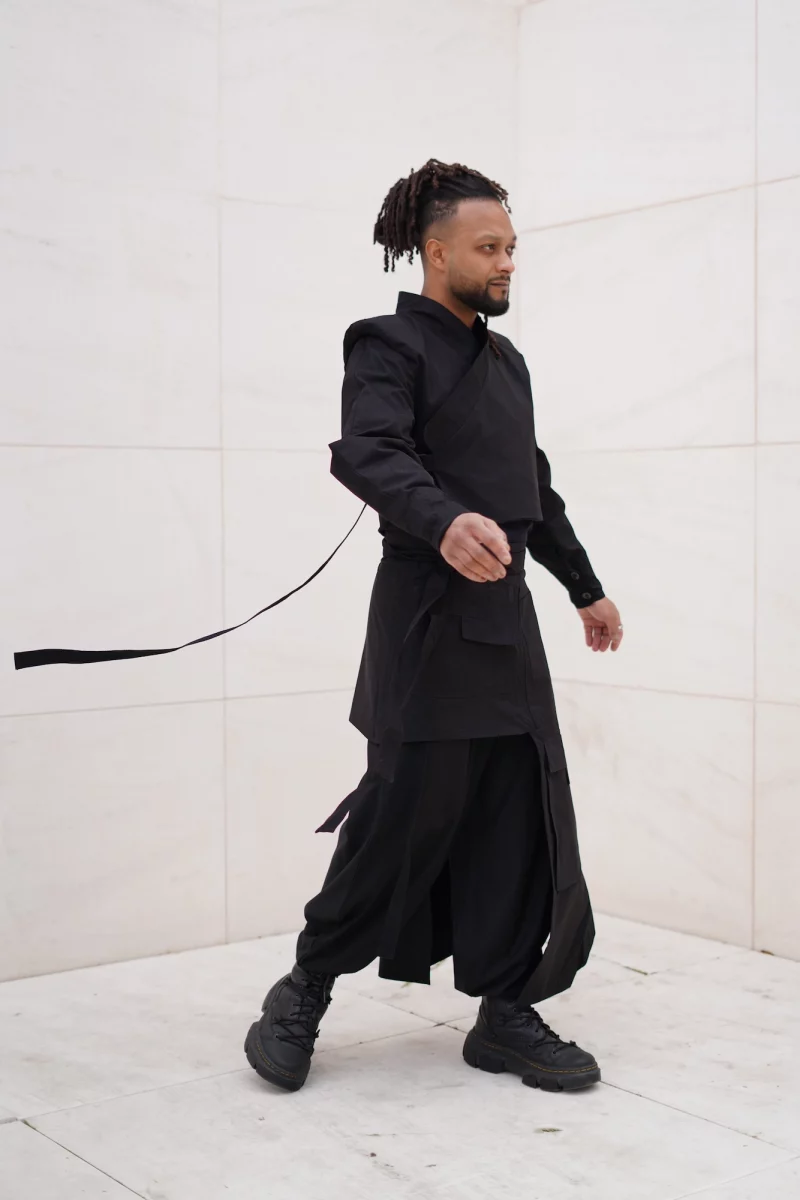
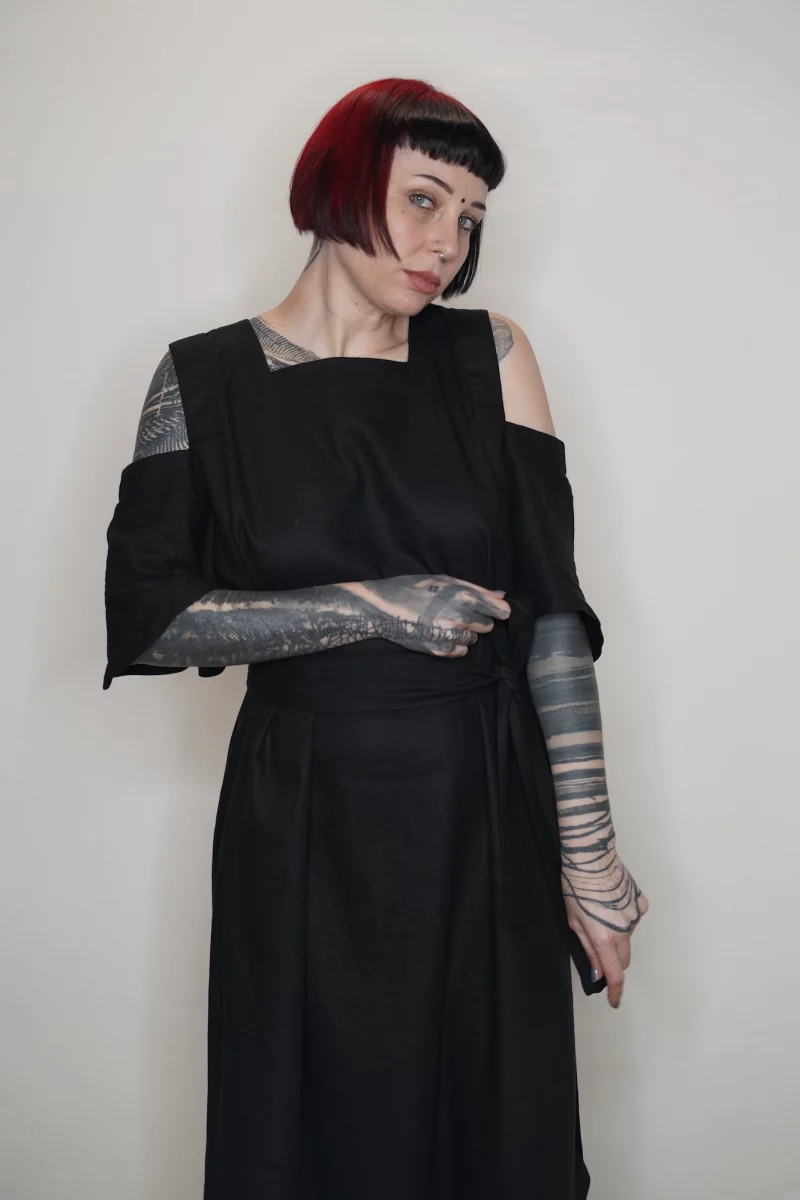
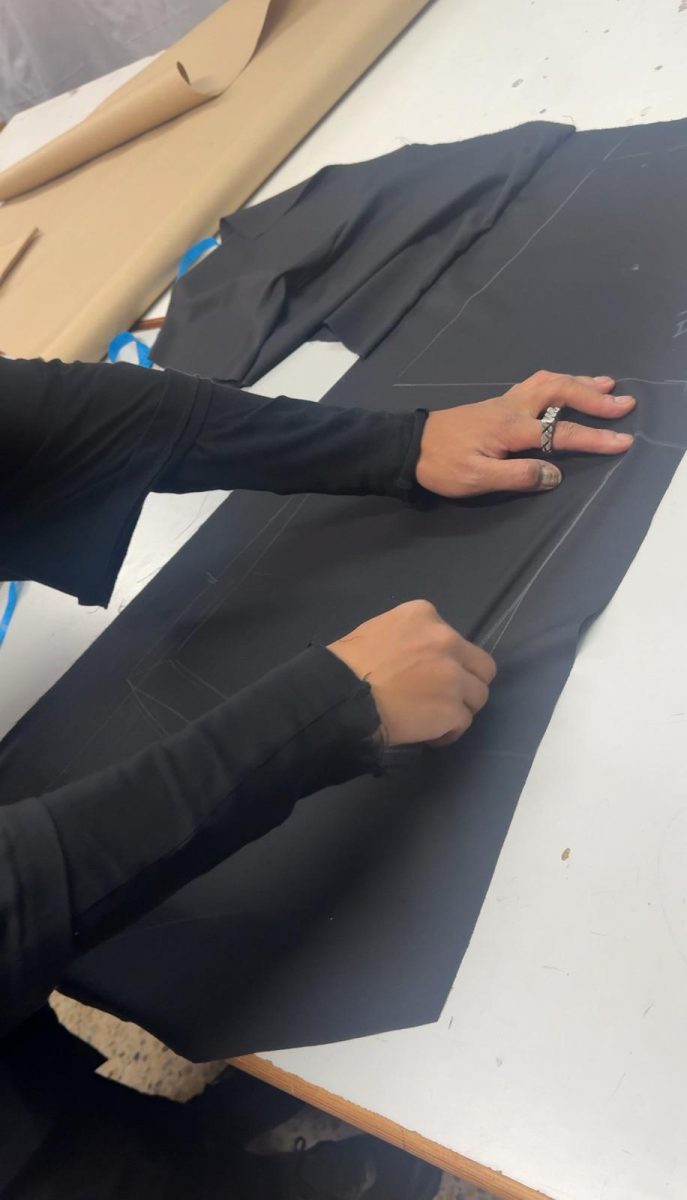

Throughout this conversation, ANATHEMA reveals itself as a project where every creative decision carries meaning: from choosing black as a language to crafting pieces that merge aesthetics with consciousness. Fashion, thought, and ritual converge to offer not just garments, but experiences that invite introspection and a renewed awareness of how we relate to what we wear.
ANATHEMA transforms the act of dressing into a silent ritual, where every fold, texture, and silhouette speaks of consciousness, identity, and time. More than garments, their creations are fragments of thought, inviting pause, observation, and the experience of fashion as a living, mindful practice.
Discover more about ANATHEMA