
Every piece she sells was made to never be forgotten.

Pieces that already survived being forgotten once.
Pilar Lobato left law school in her third year for a Sunday stall at a flea market in Santander. There she learned something no degree was going to teach her: that a stone cut in 1920 looks nothing like anything made today, and that difference has a price people are willing to pay.
Joyas Antiguas Sardinero doesn’t design. That’s the distinction that separates it from almost any other firm with the word “jewelry” in its name. What Pilar does is recognize: travel, look at thousands of pieces, tell an antique-cut diamond apart from a later imitation, and decide which one deserves a second owner. Thirty years later, that ability has taken the shape of three stores: Santander, Bilbao, Madrid.
What tends to get left out of the interviews about the vintage boom, or the celebrities who’ve been photographed wearing her pieces, is the idea that holds everything else together: she has never owned any of this. Her work consists of caring for objects during the stretch of the road they happen to share with her, then letting them go.
We spoke with Pilar about what it means to build an entire craft around things that, by her own account, were never truly hers.

The people behind Joyas Antiguas Sardinero
— Pilar Lobato
Founder. Three decades spent reading provenance, technique and period in pieces that already existed before she found them.
The Dialogue
Pilar, before Joyas Antiguas Sardinero existed, there was an important life decision: leaving behind the path you had already built to dedicate yourself entirely to the world of antique jewelry. What did you find in these pieces that made the change of course worth it?
I never experienced it as abandoning a path, but as finding the one that was really mine. Some decisions aren’t made overnight; there simply comes a moment when you realize you can’t look away anymore.
In antique jewelry I found something I hadn’t found anywhere else: every piece had a history, a personality, and a value that went far beyond the economic. They had been made to accompany important moments in someone’s life, and decades later, they still carried that ability to move you.
I was fascinated to discover that a piece of jewelry could cross generations without losing its essence. That time, instead of taking value away from it, added to it. I understood that my work wasn’t only about selling jewelry, but about recognizing it, understanding it, and finding the person who could carry its story forward.
That was the real turning point. I didn’t just choose an industry; I chose a way of understanding value, beauty, and memory.
“I didn’t just choose an industry; I chose a way of understanding value, beauty, and memory”
Joyas Antiguas Sardinero works with pieces that already existed before they reached your hands. And yet the brand has a very defined, very personal identity. Where do you feel the creative act really happens in your work?
Many people understand creativity as the ability to create something from scratch, but I live it differently.
For me, the creative act begins long before a piece of jewelry reaches a display case. It starts the moment I’m able to recognize a piece’s value among many others, imagine the journey it’s had, and understand what makes it unique. Then comes another equally important moment: finding the person with whom that piece will make sense again.
There’s also creativity in how you interpret the past and make it speak to the present. I like helping our clients discover new ways of wearing an antique piece, showing them that something with a hundred years of history can feel completely contemporary without losing its essence.
In the end, my work is about connecting different times. Respecting each piece’s history, but allowing it to write a new chapter with someone else. That’s where I feel the real creation happens.
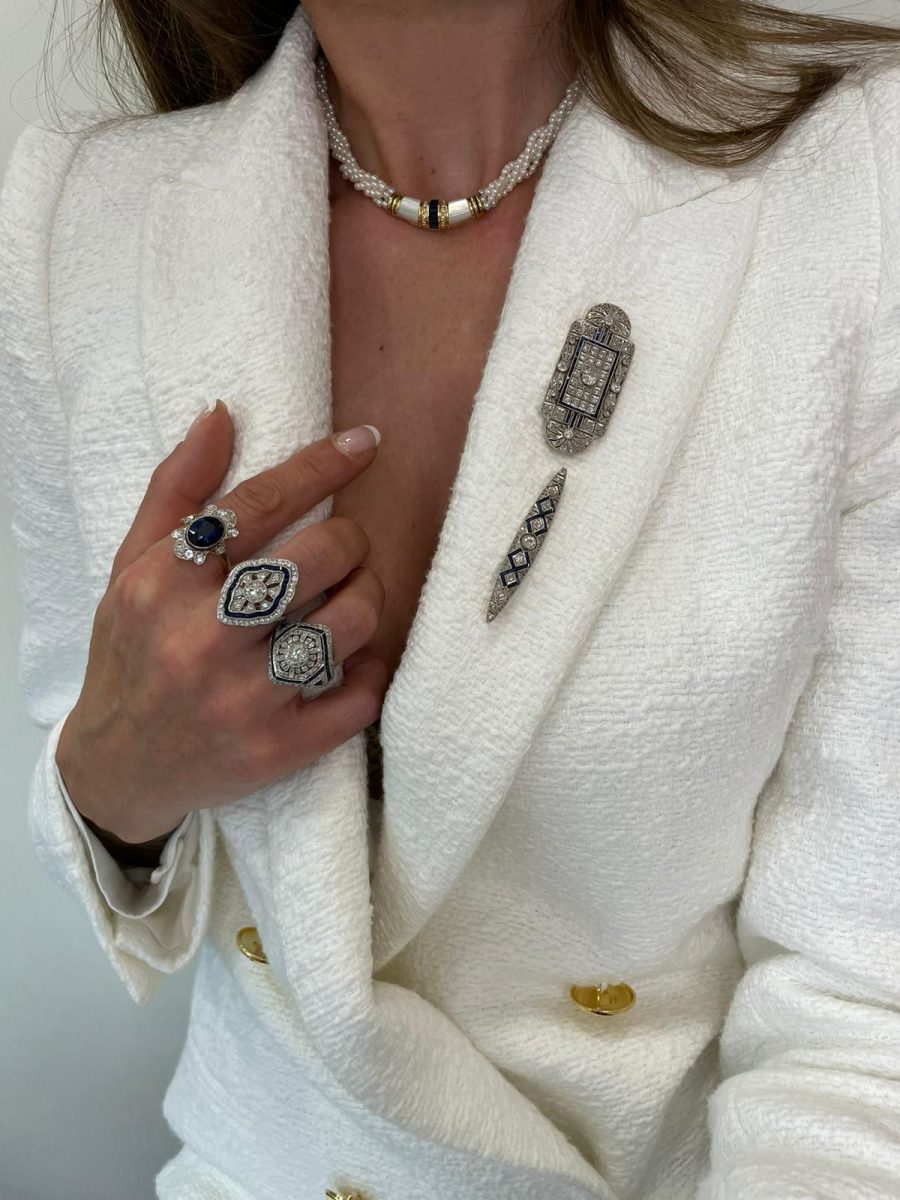
You live daily among pieces that have outlasted many of the people who once owned them. What has that constant relationship with time taught you about the value of things?
Working every day with antique jewelry inevitably changes the way you understand time. You realize almost everything is passing, but some things manage to endure because they were made with excellence, with beauty, and with a meaning that goes beyond any trend.
Every piece has belonged to someone. It has witnessed joys, farewells, celebrations, new chapters. I often think we’re only a part of the journey these pieces take. We look after them for a while, and then they continue on their way.
That has taught me to value what’s authentic much more. We live in a time when everything feels immediate, but antique jewelry reminds us that real value needs time to be built. It’s not only true of objects; it’s true of people, relationships, and trust.
Maybe that’s the biggest lesson this craft has given me: understanding that what lasts is almost never born from haste, but from time, from care, and from the ability to move people generation after generation.
“We look after them for a while, and then they continue on their way”
Your work moves constantly between technical knowledge and intuition. When a piece is in front of you, what determines whether you bring it into the collection?
I always say a piece has to speak to me in two languages. The first is knowledge: its period, its condition, the quality of the gems, the technique it was made with, its authenticity. That part is essential and only comes with many years of experience.
But then there’s something that can’t be measured. Some pieces, from the very first moment, carry a particular personality. They have a harmony, a strength, or a history you can sense before you’ve even finished examining them. That intuition never replaces technical judgment, but it walks alongside it.
Only when both things align, the certainty knowledge gives you and the emotion a piece stirs, do I feel it deserves to be part of our collection.
In the end, we’re not trying to gather many pieces. We’re trying to choose the ones that still have something to say, that hold on to their identity, and that are ready to move someone all over again.

Eva Longoria wearing a necklace from Joyas Antiguas Sardinero.
Many of the pieces that reach you come from inheritances, losses, or deeply personal stories. How does your relationship with a piece change once you know the life it had before it reached your hands?
When I know a piece’s history, it inevitably changes the way I look at it. It stops being simply an extraordinary object because of its design, period, or gems, and becomes the silent witness to a life.
I’ve heard stories of love, of loss, of inheritances passed down through generations, and of people who chose to let go of a piece to begin a new chapter. Each of those decisions deserves the same respect.
I think a very important part of my work is understanding that, before they reach our hands, these pieces have been part of a family’s history. That’s why I try to always handle them with the care that history deserves.
And when they finally find a new owner, I like to think they’re not closing a chapter, but opening one. That, perhaps, is the greatness of antique jewelry: it holds the memory of what’s already been lived, while still creating new memories for someone else.

Teresa Andrés Gonzalvo wearing vintage pieces from Joyas Antiguas Sardinero.
After more than twenty years searching for jewelry around the world, is there a piece that was especially hard for you to let go of? What made it so difficult to part with?
Yes, there have been pieces I found hard to say goodbye to. And they’re not always the most valuable ones, but the ones that, through their beauty, their history, or their personality, manage to move me in a particular way.
Over the years I’ve learned that antique jewelry never fully belongs to us. We only look after it for part of its journey. My job is to find these pieces, take care of them, and when the right person comes along, let them carry on writing their story.
It’s always a little sad to see them go, but it’s also one of the greatest satisfactions of my work. It means the piece has found where it’s going next.
“We only look after it for part of its journey”
The contemporary luxury market is built, largely, on novelty and constant production. Joyas Antiguas Sardinero operates from a completely opposite logic. Do you feel that puts you in tension with the industry, or simply somewhere else?
I don’t feel tension with the industry; I feel we speak a different language.
Contemporary luxury has its place and answers to a particular way of consuming. We, on the other hand, work with pieces that have already proven their value through time. They don’t need to convince anyone of what they are, because they’ve been doing it for decades, and sometimes centuries.
For me, true luxury isn’t necessarily about wearing something new. It’s a quieter kind of luxury, less immediate, and maybe because of that, deeper. Joyas Antiguas Sardinero doesn’t revolve around new or old. It revolves around what deserves to be kept.
“They don’t need to convince anyone of what they are”

Blanca Suárez styled in Joyas Antiguas Sardinero.
More and more artists, editors, and younger generations are drawn to historical and vintage pieces. What do you think they find in them that they don’t always find in contemporary jewelry?
I think they’re looking for authenticity. We’re living in a moment when many people want to surround themselves with objects that carry identity, history, and a meaning that goes beyond aesthetics.
An antique piece is one of a kind. It has crossed time, it was made with an extraordinary level of detail, and it comes to us carrying a history no newly made piece can have.
It’s not about choosing between old and contemporary. Antique jewelry simply offers something very particular: the feeling of wearing a unique piece, one with a soul, and with a legacy that continues in whoever chooses it.

Marta Lozano in Joyas Antiguas Sardinero.
The knowledge you’ve built up around historical jewelry is difficult to pass on: it lives in experience, in a trained eye, in years of searching. Does it worry you that this knowledge could be lost, or do you trust there will always be someone who wants to learn it?
I believe knowledge only survives if it’s shared. Part of it can be studied, but another part is only gained over the years, by looking at thousands of pieces, getting it wrong, learning, and developing the sensitivity this craft demands.
I’d like to think that knowledge won’t be lost. I have two daughters, and as a mother, I would love it if one day they wanted to carry this legacy forward. But only if they live it with the same passion I’ve lived it with. Never because they feel they have to.
In the end, this isn’t a craft that can be imposed. It’s a path you choose. And I trust there will always be people with the curiosity, the patience, and the respect needed to keep learning and keep this knowledge alive.
“This isn’t a craft that can be imposed. It’s a path you choose”

Belinda with pieces from Joyas Antiguas Sardinero.
Looking ahead, how would you like Joyas Antiguas Sardinero to be remembered?
I’d like Joyas Antiguas Sardinero, many years from now, to still be recognized as the place where great jewelry finds the people who know how to appreciate it.
I’ve always thought our essence can be summed up in one simple idea: Joyas Antiguas Sardinero is the place where you acquire great jewelry, great pieces. Not only for their value or their beauty, but for the history, the quality, and the legacy they represent.
But above everything, I’d like the brand to be remembered for the judgment, the honesty, and the passion we’ve worked with all these years. For anyone who thinks of Joyas Antiguas Sardinero to think of a place they can trust, where every piece has been chosen with knowledge, respect, and emotion.
If we ever manage to make that our legacy, I’ll feel this whole journey was worth it.
“If we ever manage to make that our legacy, I’ll feel this whole journey was worth it”
A Craft With No Sketch
Pilar Lobato doesn’t draw anything. There’s no design table at Joyas Antiguas Sardinero, no workshop of her own where a piece is born from a blank page. Everything she sells already existed before she ever touched it, designed and worn by other hands long before any piece crossed Sardinero’s counter. Thirty years later, the brand has an identity as recognizable as that of any firm that actually designs.
That forces a rethink of where authorship really lives in a business like this. It lives in the filter: what gets accepted and what gets passed over. Of every thousand pieces Pilar examines, at a fair in Mexico, an inheritance in Valencia, a sale in Galicia, only a fraction makes it into Sardinero’s cases. The rest falls away, unknown to anyone outside that process. The real exercise of judgment happens there, in that silent discarding, long before a piece ever reaches the display.
There’s something almost forensic in how that judgment operates: provenance is verified piece by piece, along with carat weight and whether the period matches the technique. A diamond with more facets than existed in 1920 is already confessing it isn’t what it claims to be. That rigor is the language Pilar uses to decide which piece deserves to tell its story.
Sardinero’s real competition is against time itself: against the certainty that certain settings, certain workshop crafts, no longer exist, and that recognizing them before the market loses them for good is as much an act of conservation as it is of commerce.
No one taught her this in a classroom. You learn it by looking at thousands of wrong pieces until your eye starts getting it wrong less often.









What Arrives When Something Ends
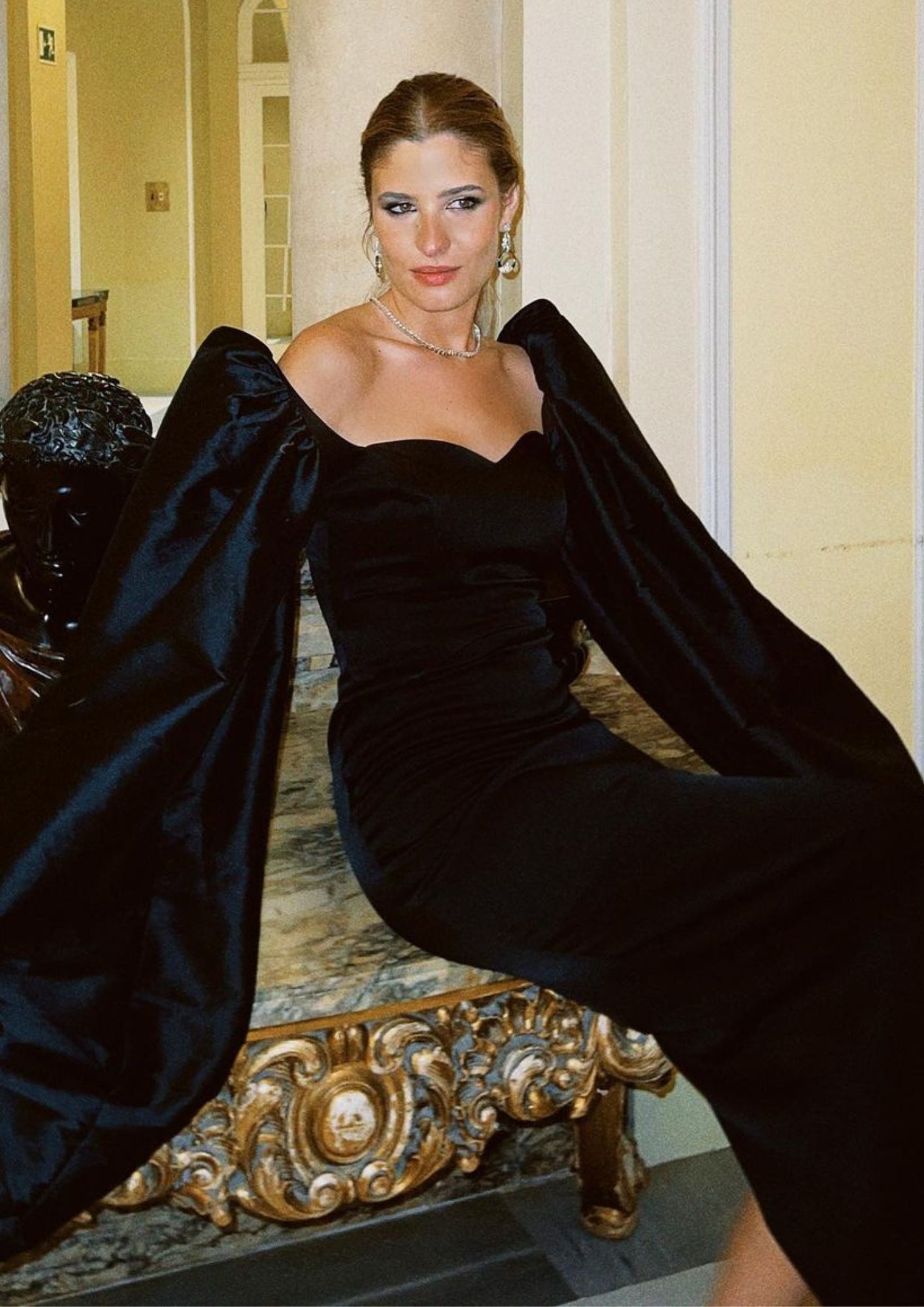
Behind every case at Sardinero there’s a reason a piece changed hands, and it’s rarely a happy one. An inheritance with no emotional attachment gets liquidated the day after the death. Other times it’s a widow who would rather part with a ring than with her home, to make her pension stretch further. Pilar Lobato has spent thirty years on the other side of those conversations, listening to what people say when they hand over something they didn’t want to give up.
What she does with that information is act as a hinge: receiving an object at the exact moment one story closes, and holding onto it until another begins. That in-between point, uncomfortable and almost always invisible, is the real work, even if it never shows up in a display window or a campaign.
There’s a second half to this story that rarely gets told: the pieces that almost never arrive. Every economic crisis sends gold to be melted down at cash-for-gold shops, where no piece is valued for what it was, only for what it weighs. Whether part of that gold gets saved, instead of melting down without a trace, depends on contacts who give a warning in time, and on someone willing to pay for a history that, technically, is worth nothing on the metal market.
Seen this way, Sardinero operates as a place where grief and family memory end up turned into an object someone else will wear without knowing any of it. Pilar’s discretion works as the bare minimum condition, the way she keeps doing this work without every piece that passes through her hands weighing on her.
❴ Custodians of what already had an owner ❵
Thirty years after that Sunday stall in Santander, Pilar Lobato is still doing what she did back then: looking at a piece and deciding whether it deserves a second owner. Some of the pieces that have passed through her hands came close to being melted down at a cash-for-gold shop, reduced to weight and nothing else. The ones that make it to her cases have already won that bet once. The next one is played by whoever wears them.
Images courtesy of Joyas Antiguas Sardinero
Discover more about Joyas Antiguas Sardinero