
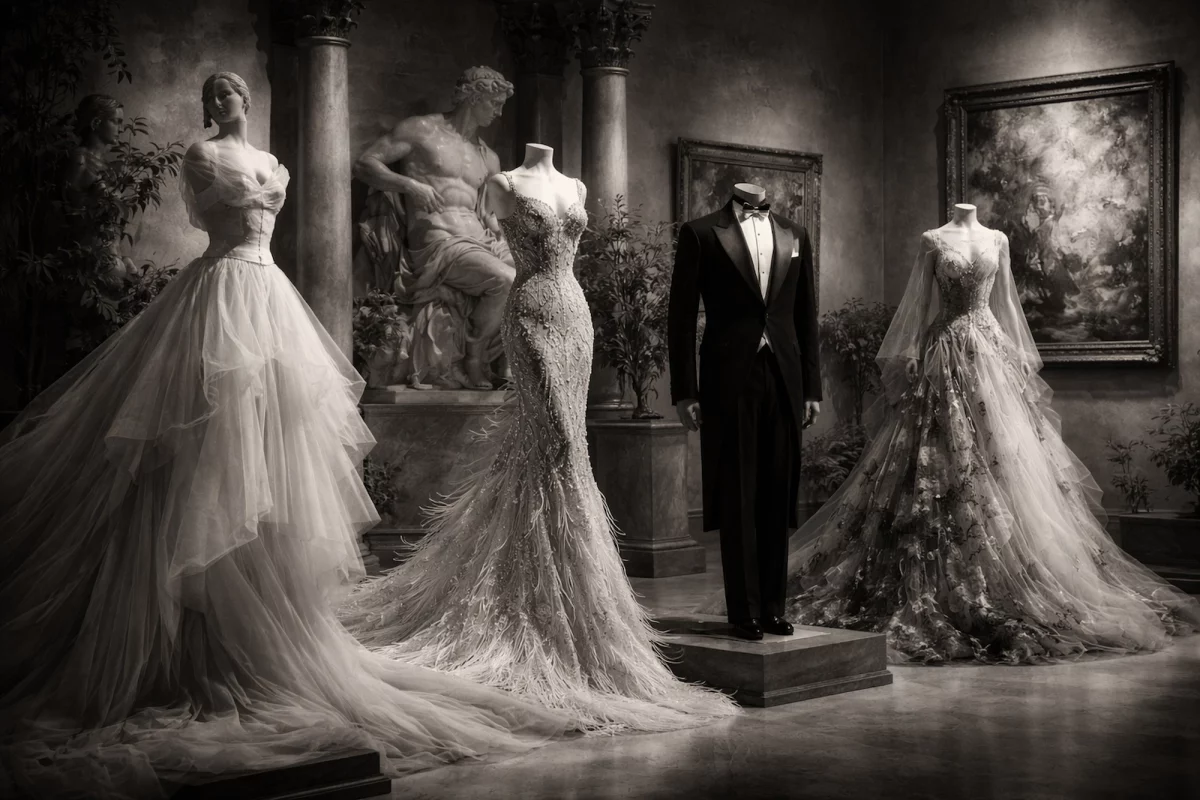
Each year, the first Monday in May transforms the steps of the Metropolitan Museum of Art into the most watched fashion moment on the planet. For the Met Gala of 2026, set for May 4, that moment promises something even more profound than spectacle: a cultural insistence that fashion does not merely reflect art, it is art.
This edition’s theme, “Costume Art,” will anchor both the gala and the accompanying Costume Institute exhibition, exploring how the body dressed becomes a historical and artistic subject in its own right, equal in importance to painting, sculpture, and other traditional forms.
The Museum as Context, Not Backdrop
The Met Gala serves as both a fundraiser and a prelude to the Institute’s annual spring exhibition, and in 2026 this dual role takes on heightened significance. The Costume Art exhibition, opening to the public on May 10, 2026, and running through January 10, 2027, will be presented in the newly dedicated Condé Nast Galleries,a 12,000-square-foot space that foregrounds fashion within the museum’s artistic context.
Curated with an emphasis on the “dressed body,” the show sets fashion alongside works from the museum’s vast collection, tracing visual dialogues that span from antiquity to the present. This thematic framing reframes garments not as historical curiosities, but as expressive objects of cultural meaning, where drapery, silhouette, and surface interact with artistic traditions across time.
The Red Carpet as Performance Art
Anticipation for the 2026 red carpet centers on the interpretive possibilities of the Costume Art theme. Designers and celebrities are expected to channel references that range from ancient sculpture and Renaissance portraiture to modernist and avant-garde experimentation. Sculptural forms, painterly textiles, and garments that blur the boundaries between costume and canvas may dominate the steps of the Met for this edition, positioning each appearance not as a look, but as a cultural proposition.
The gala’s official host committee, likely to include a blend of major figures in music, fashion, and film, will complement an aesthetic agenda whose ultimate expression is a living, breathing tableau of creativity.
Why “Fashion as Art” Matters Now
In recent years, fashion institutions around the world have accelerated a long-term paradigm shift: garments are no longer merely stylish objects, but vehicles of meaning. Museums are acquiring couture alongside canonical works of art. Fashion photography fills galleries. Designers collaborate with artists across disciplines.
Costume Art positions the Met Gala not as a decorative event, but as a moment of cultural articulation, a claim that the dressed body, when understood within a lineage of artistic representation, holds conceptual parity with painting and sculpture.
This conversation resonates with ÉTER MAG’s own editorial ethos: fashion is not secondary to art, it is one of its most immediate and embodied forms.
Fashion as Living Culture
At its best, the Met Gala has always been a site where glamour and intellectual inquiry intersect. In 2026, that intersection will be more visible and intentional than ever before: fashion understood not as adornment, but as cultural syntax; garments not as attire, but as artifacts of meaning.
The gala will not merely showcase clothes. It will activate them.
And in doing so, it will remind the world — once again — that the body, dressed by imagination, remains one of our most enduring canvases.