
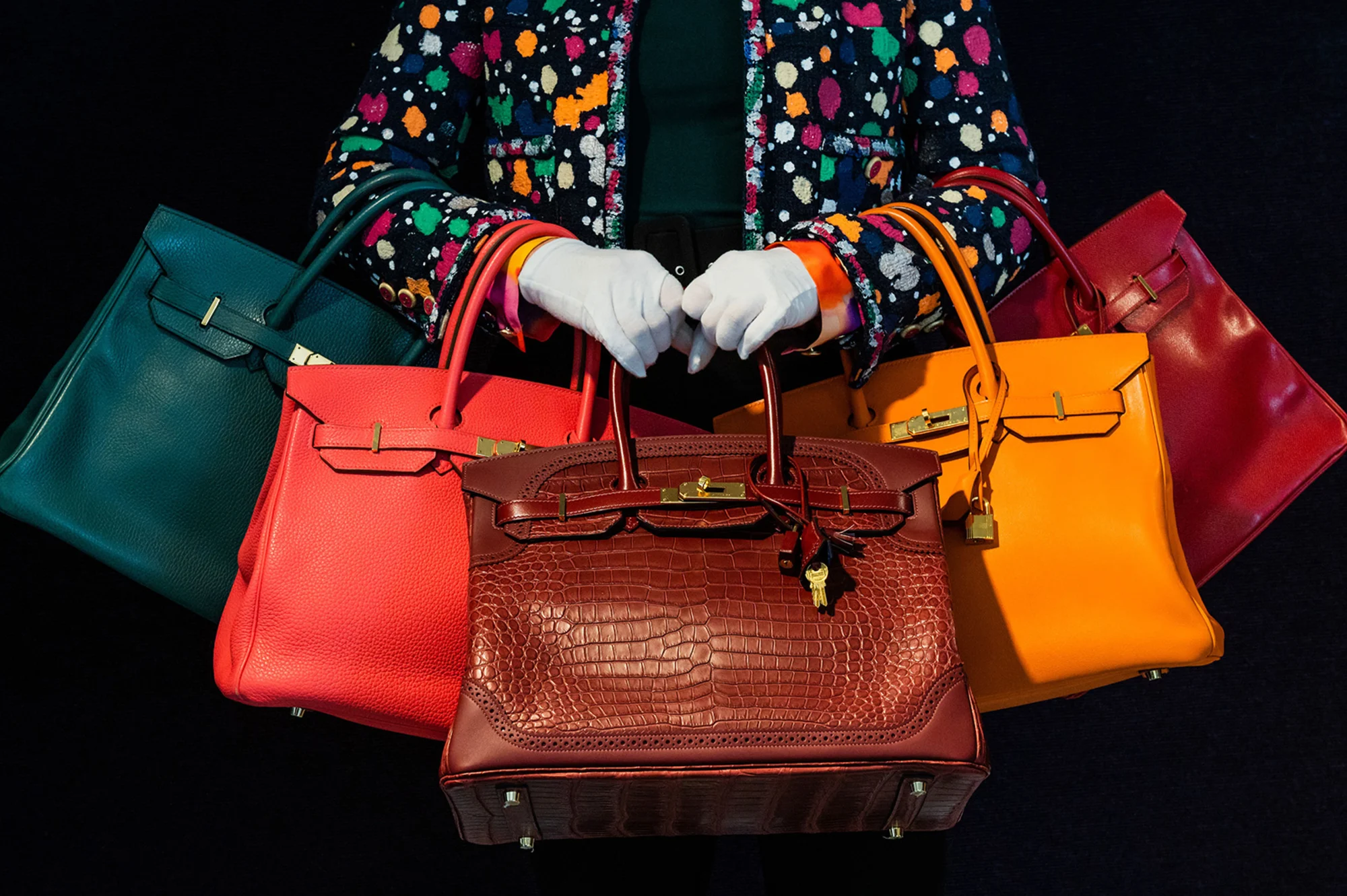
Few accessories encapsulate as much history, identity and symbolic power as the handbag. Before becoming the absolute protagonist of street style and the coveted object of luxury houses, the handbag was an essential tool for human survival. Its evolution is also a reflection of the social, economic and cultural transformations that have marked each era. Today, understanding its origin means understanding why it has become a status symbol and a key piece in the narrative of contemporary fashion.
The first handbags: Pure functionality in the earliest civilizations
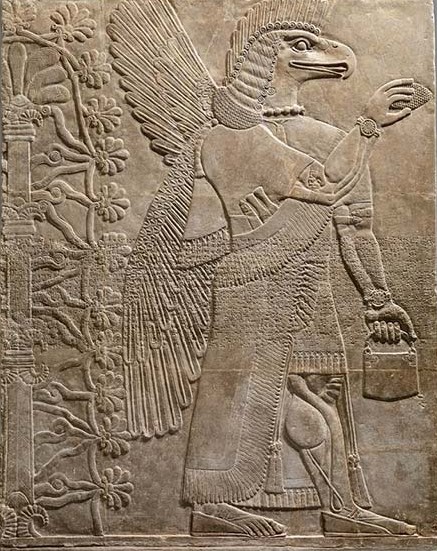
The ‘Handbag of the Gods’: Detail of an Assyrian relief showing the enigmatic object, a recurring motif in the art of multiple ancient civilizations.
The origins of the handbag go back thousands of years. The earliest depictions come from the Paleolithic and Neolithic periods, where human figures with small pouches or hanging bags appear in cave paintings. Their purpose was simple: to carry tools, food or ritual objects.
In civilizations such as Mesopotamia, Egypt and Greece, both men and women used small bags made of leather, plant fibers or linen. There was no gender distinction: the need to transport items made the handbag a universal accessory. In Egypt, for example, beads-decorated bags belonging to high officials have been found, indicating that even then they combined functionality with aesthetic value.
During the Middle Ages, handbags evolved into belt pouches, essential for merchants, pilgrims and travelers. Before pockets were incorporated into clothing, these small containers were as necessary as smartphones are today.
The renaissance and the transition toward ornamentation
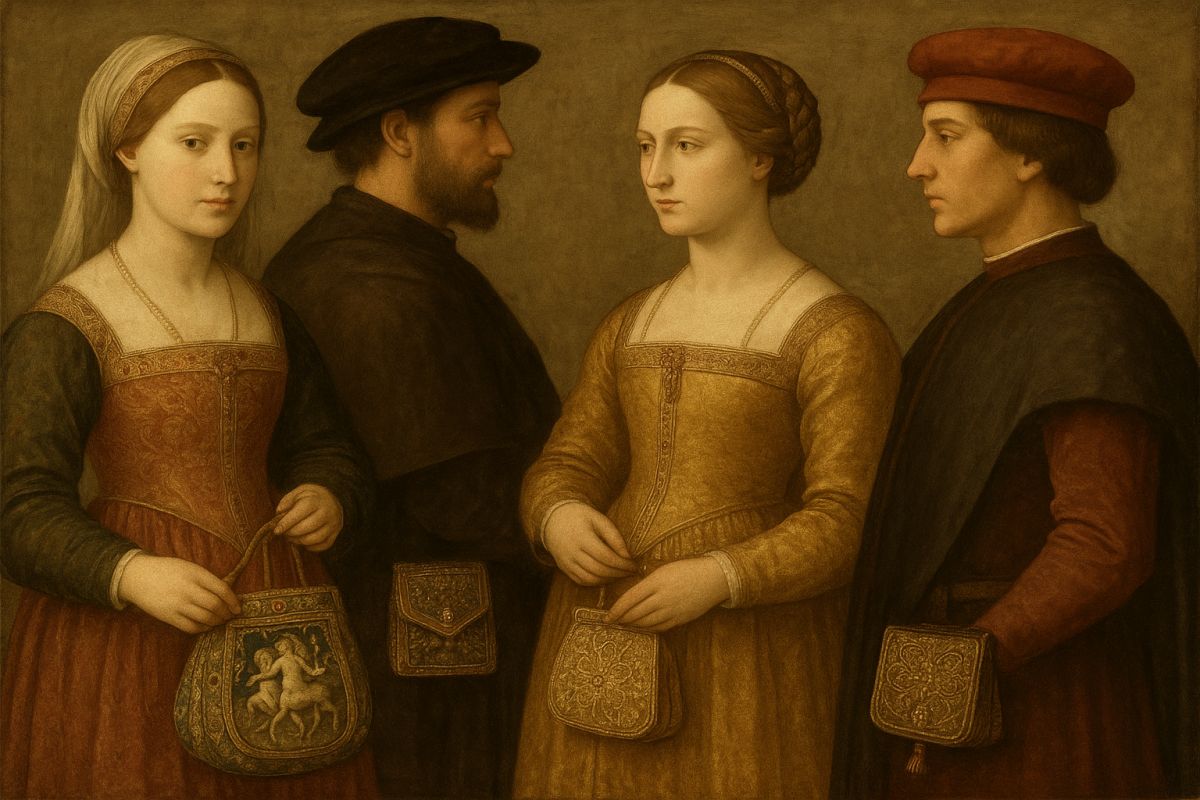
During the Renaissance, bags evolved into highly ornamental pieces.
In the Renaissance, the increasing sophistication of fashion and the refinement of craftsmanship marked a turning point. Alms purses and embroidered pouches appeared, mainly used by the aristocracy. Women carried delicate bags adorned with gold thread, pearls or mythological scenes, while men incorporated discreet pouches under their capes or belts.
The emergence of advanced embroidery and metalwork techniques turned the handbag into a canvas for decorative art. It was no longer just a functional object: it had become a symbol of social class, education and economic power.
The 19th century: Railways, long journeys and the birth of luxury
The 19th century transformed human mobility. With the expansion of the railway and long-distance travel, an urgent need arose: to transport personal belongings safely, durably and elegantly. This context became the breeding ground for the birth of great leather-goods houses.
In 1854, Louis Vuitton revolutionized luggage by creating flat, water-resistant, stackable trunks that changed travel forever. Soon after, brands like Moynat, Goyard, and later Gucci, expanded the repertoire with suitcases, travel bags and handcrafted pieces made to the highest luxury standards.
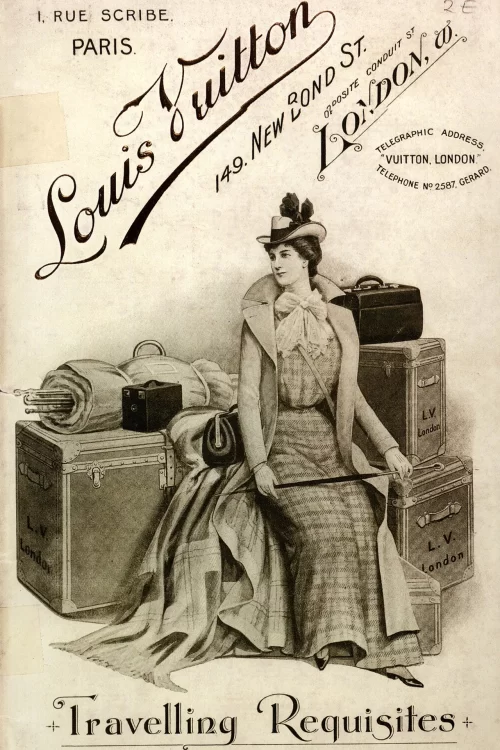
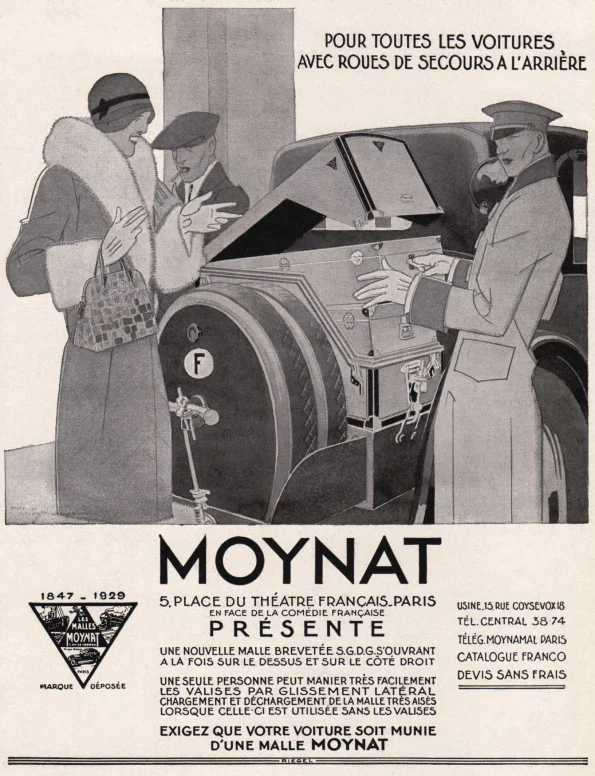
This is the moment when the handbag stops being merely a container and begins to become a marker of status. Owning a bag made by expert artisans signaled sophistication, wealth and access to an elite lifestyle.
The 20th century: when the handbag narrates the spirit of each decade
The 20th century cemented the handbag as a cultural icon. Each decade created shapes, materials and narratives that continue to influence fashion today.
•1920s: emancipated women adopted small rigid bags and clutches that accompanied the new modern lifestyle. The reticule made its presence known in parties, jazz clubs and the first mass social gatherings.
•1950s: Chanel launched the legendary 2.55, introducing the metal chain strap and the idea of everyday luxury with practical elegance. It became one of the first handbags to define the concept of “daily chic.”
•1980s and 90s: the handbag became a symbol of emerging capitalism. Iconic pieces such as the Birkin by Hermès (1984) redefined exclusivity and waiting lists. In the 90s, Gucci popularized the Jackie bag, embraced by celebrities and public figures.
•Late 20th century and 2000s: pop culture, globalization and designer fashion amplified the desire for these objects. From Fendi’s “Baguette” to Dior’s “Saddle,” handbags became aspirational pieces that reflected the spirit of an entire generation.
The handbag as a symbol of identity and status in the 21st century
Today, the handbag is more than an extension of personal style: it is a social code. The way one chooses, carries and collects a bag speaks volumes about values, aspirations and individual narratives.
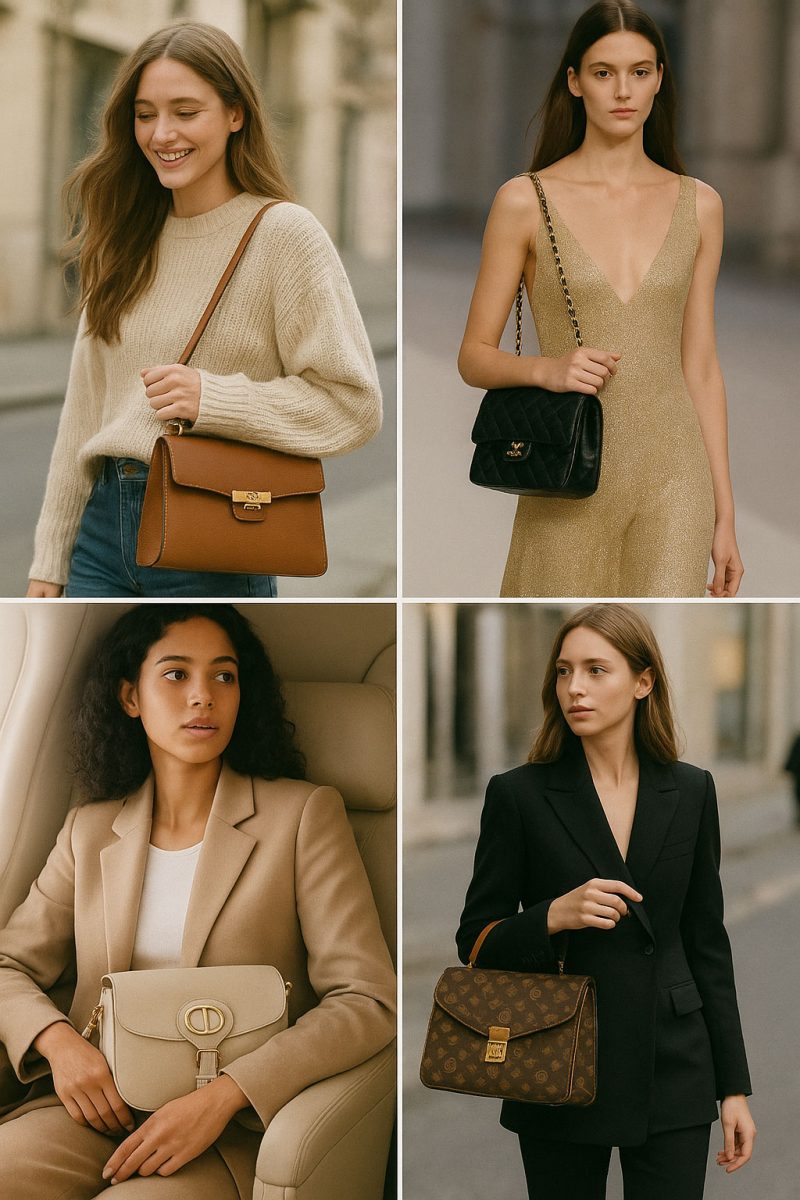
Social media and street style have boosted the phenomenon of seasonal “it bags,” while the second-hand market and the revaluation of vintage pieces have turned certain handbags into real investments. Models like the Birkin or the Kelly outperform even traditional financial assets in annual appreciation.
- A piece of artisanal luxury
- An emotional object
- A status symbol
- A cultural icon
- A vehicle for personal expression
A small object with a giant history
From prehistoric pouches to contemporary luxury icons, the handbag has accompanied humanity as a silent witness to evolution, power and aesthetics. Its transformation is a cultural map of who we are, how we live and what we value.
In a world where fashion intertwines with identity, the handbag remains that small, powerful object that defines styles, communicates status and holds personal stories. An accessory that, thousands of years later, continues to be essential—not just to carry objects, but to build meaning.